
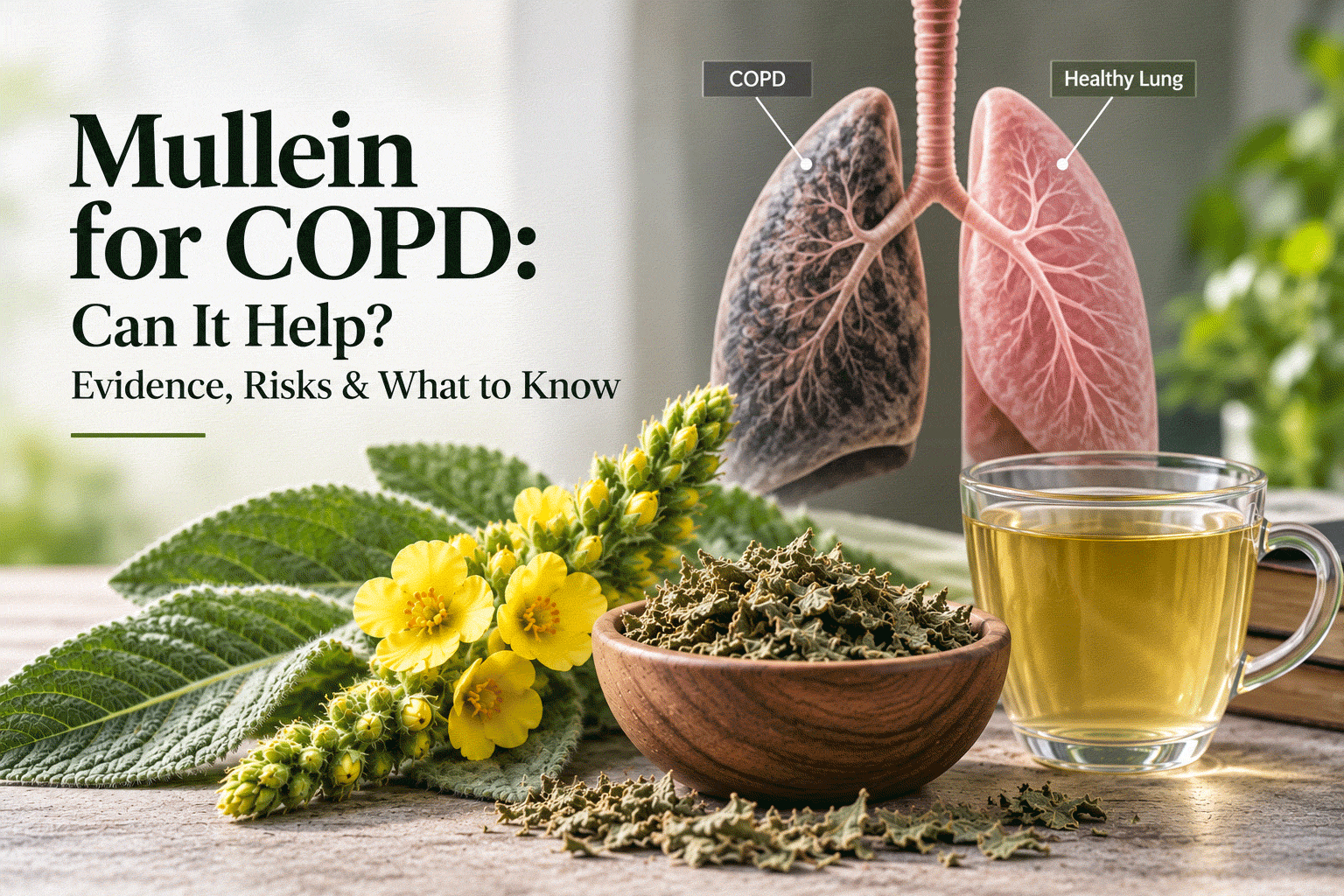
Quick answer: There is no good clinical evidence that mullein treats COPD, reverses emphysema, repairs permanently damaged lung tissue or replaces COPD inhalers, pulmonary rehabilitation, oxygen therapy or other prescribed treatment.
Mullein has a traditional respiratory-use history, and some people with COPD may be interested in tea or extract for general throat or cough comfort. That should be kept clearly separate from treatment of the underlying chronic lung disease.
Mullein for COPD — quick evidence guide
| Question | Evidence-based answer | Related guide |
|---|---|---|
| Can mullein treat COPD? | No strong human clinical evidence shows that mullein treats COPD or slows COPD progression. | Mullein & Lung Evidence |
| Can mullein repair COPD lung damage? | No evidence shows that mullein reverses emphysema, chronic airway remodeling or established loss of lung function. | Lung Repair & Detox Claims |
| What about chronic bronchitis? | Chronic bronchitis is one of the major COPD conditions and requires long-term disease management rather than herbal self-treatment. | Mullein for Bronchitis |
| Can mullein help COPD mucus? | Mullein has a traditional expectorant reputation, but reliable mucus clearance or fewer COPD exacerbations have not been established in strong human trials. | Mullein for Mucus |
| Can mullein replace a COPD inhaler? | No. Bronchodilators and other inhaled medicines are evidence-based COPD treatments and should not be replaced with mullein. | Shortness of Breath |
| Can someone with COPD drink mullein tea? | Tea may be used by some people as a beverage, but COPD patients should consider medications, medical conditions and product safety before adding supplements. | Mullein Tea |
| Is smoking mullein safer for COPD? | No. Inhaling smoke or combustion products is not a COPD treatment and can add respiratory irritation. | Mullein Smoking |
Bottom line: mullein should not be marketed or used as a COPD treatment. The evidence-based priorities are reducing harmful exposures, using prescribed COPD therapy correctly and managing symptoms and exacerbation risk with appropriate medical care.
Short answer: Mullein has a long history in traditional respiratory herbal medicine, but there is not strong human clinical evidence showing that mullein treats COPD, reverses emphysema, restores lost lung function or prevents COPD flare-ups.
Some of the reasons people are interested in mullein for COPD are understandable. Mullein has traditionally been associated with cough, mucus and respiratory discomfort, while modern laboratory research has reported several interesting biological activities.
But COPD is a chronic lung disease, not simply a cough or excess mucus problem.
This guide explains what COPD is, why mullein is sometimes promoted for it, what the evidence actually shows, and where the claims become stronger than the science.
What Is COPD?
COPD stands for chronic obstructive pulmonary disease.
It is a chronic lung condition characterized by persistent respiratory symptoms and airflow limitation.
COPD can involve conditions and structural changes associated with chronic bronchitis and emphysema.
Common symptoms can include:
- shortness of breath;
- chronic cough;
- mucus or sputum production;
- wheezing;
- chest tightness;
- and reduced ability to exercise or perform daily activities.
Symptoms often develop gradually and may worsen over time.
Smoking is an important cause of COPD, but other exposures and factors can also contribute.
How Is COPD Diagnosed?
COPD should not be diagnosed based only on symptoms such as cough or mucus.
According to the U.S. National Heart, Lung, and Blood Institute, the main lung-function test used to diagnose COPD is spirometry.
Spirometry measures how much air a person can breathe out and how quickly they can exhale it.
A healthcare professional may also consider:
- respiratory symptoms;
- smoking history;
- exposure to dust, fumes or air pollution;
- family history;
- additional lung-function tests;
- and imaging when appropriate.
This matters because persistent cough or shortness of breath should not simply be assumed to mean the lungs need an herbal remedy.
Why Do People Use Mullein for COPD?
Mullein has been connected with respiratory herbal practice for centuries.
Traditional literature and modern reviews discuss mullein in connection with:
- cough;
- respiratory discomfort;
- mucus;
- traditional expectorant use;
- and pulmonary complaints.
Those historical associations overlap with some symptoms experienced by people with COPD.
As a result, modern marketing sometimes expands traditional mullein use into claims that it can:
- treat COPD;
- repair lung damage;
- reverse emphysema;
- open the airways;
- clean smokers’ lungs;
- or replace prescription inhalers.
Those claims go much further than traditional use.
Can Mullein Help COPD?
There is currently not enough high-quality human clinical evidence to say that mullein effectively treats COPD.
There is no strong evidence demonstrating that mullein reliably:
- improves spirometry results;
- restores lost lung function;
- reduces COPD exacerbations;
- reverses emphysema;
- slows COPD progression;
- or reduces the need for established COPD medication.
The most accurate conclusion is therefore:
Mullein has a traditional respiratory history, but it has not been established as an evidence-based treatment for COPD.
What Does the European Medicines Agency Say About Mullein?
The European Medicines Agency has formally evaluated mullein flower.
Its conclusion is based on long-standing traditional use for relief of sore throat associated with dry cough and cold.
EMA also notes that clinical studies with mullein flower medicines are lacking.
COPD is not the recognized indication in the European herbal monograph.
This means EMA’s traditional-use conclusion cannot reasonably be rewritten as:
“Mullein is clinically proven to treat COPD.”
What Does Scientific Research on Mullein Show?
Modern scientific reviews describe Verbascum thapsus as containing a variety of phytochemicals.
These include:
- flavonoids;
- iridoids;
- phenylethanoid glycosides;
- phenylpropanoid glycosides;
- saponins;
- and other plant constituents.
Experimental research has explored biological activities including:
- anti-inflammatory activity;
- antioxidant activity;
- antimicrobial activity;
- antiviral activity;
- and other pharmacological effects.
These findings are useful for understanding the plant.
They do not demonstrate that mullein produces clinically meaningful COPD outcomes in people.
For more about the evidence hierarchy, see Mullein Research.
Does Mullein Reduce Lung Inflammation in COPD?
This is one of the most common ways laboratory findings are overstated.
Some mullein extracts have demonstrated anti-inflammatory activity in experimental research.
But that does not establish that mullein reduces airway inflammation in people with COPD.
A meaningful COPD claim would require human evidence showing outcomes such as:
- improved symptoms;
- better lung function;
- fewer exacerbations;
- or other clinically measurable improvements.
Laboratory anti-inflammatory activity alone is not enough.
Does Mullein Improve Lung Function?
There is not sufficient clinical evidence showing that mullein improves lung function in people with COPD.
Terms such as:
- “strengthens the lungs”;
- “restores breathing capacity”;
- “opens the lungs”;
- or “rebuilds lung function”
sound simple but imply measurable physiological effects.
These claims would ideally be demonstrated through validated lung-function measurements such as spirometry.
That evidence has not been established for mullein.
Can Mullein Reverse COPD?
No evidence shows that mullein reverses COPD.
COPD can involve persistent structural and functional changes in the respiratory system.
Claims that a botanical product can return COPD lungs to their previous condition are not supported by current evidence.
Current COPD treatment aims to reduce symptoms, improve quality of life, reduce exacerbation risk and slow disease progression where possible.
Can Mullein Reverse Emphysema?
There is no reliable evidence showing that mullein reverses emphysema.
Emphysema involves damage to the lung’s air sacs and loss of normal respiratory structure.
Statements claiming that mullein can:
- regrow alveoli;
- restore destroyed air sacs;
- repair emphysema;
- or regenerate damaged lungs
are much stronger than the available evidence supports.
Can Mullein Repair Lung Damage From Smoking?
There is not sufficient evidence showing that mullein repairs structural lung damage caused by smoking.
Smoking can affect the respiratory system in multiple ways, including airway inflammation, mucus production, lung-function decline and chronic disease.
These effects are more complex than a layer of material that can simply be removed with an herb.
For that topic, see Mullein for Smokers: Can It Clean or Repair Your Lungs?.
Does Mullein Clean COPD Lungs?
There is no good evidence showing that mullein “cleans” lungs affected by COPD.
The phrase lung cleanse is not a clearly defined medical outcome.
Mullein has not been shown to remove:
- cigarette tar;
- nicotine;
- pollution particles;
- or unspecified toxins
from COPD lung tissue.
See Does Mullein Clean Your Lungs? Detox Claims vs Evidence.
Does Mullein Help COPD Cough?
Cough is common in COPD, but COPD-related cough is not necessarily the same as an uncomplicated dry cough from temporary throat irritation.
Mullein flower has a documented traditional use related to dry cough and sore throat.
That does not establish that mullein treats the underlying COPD process causing chronic cough.
A persistent COPD cough may reflect chronic airway changes, mucus production or an exacerbation.
See Mullein for Cough for the broader cough evidence.
Does Mullein Help COPD Mucus?
People with COPD may experience chronic mucus or sputum production.
Mullein is often described historically as a traditional expectorant.
This has led to claims that mullein can remove COPD mucus.
However, strong clinical evidence demonstrating that mullein reliably improves mucus clearance in COPD is lacking.
A traditional expectorant reputation is not the same thing as a proven COPD treatment.
Read Does Mullein Help With Mucus?.
Does Mullein Act Like a Bronchodilator?
There is not sufficient clinical evidence showing that mullein is a reliable bronchodilator.
Bronchodilators are established COPD medicines that relax airway muscles and help make breathing easier.
Saying that mullein “opens the lungs” implies a similar physiological effect.
That effect has not been established in controlled human COPD studies.
Can Mullein Replace a COPD Inhaler?
No evidence supports replacing prescribed COPD inhalers with mullein.
NHLBI describes bronchodilators and other inhaled medicines as established components of COPD treatment.
The appropriate treatment depends on symptoms, disease severity, exacerbation history and individual circumstances.
Someone using prescribed COPD medication should not stop or replace it with an herbal product without appropriate medical guidance.
What Do Current COPD Guidelines Recommend?
The Global Initiative for Chronic Obstructive Lung Disease publishes an updated evidence-based strategy for COPD management.
The 2026 GOLD report covers diagnosis, assessment, pharmacological treatment, non-pharmacological treatment and prevention.
COPD care may include approaches such as:
- avoiding continued tobacco smoke exposure;
- appropriate inhaled medicines;
- vaccination where recommended;
- physical activity;
- pulmonary rehabilitation;
- management of exacerbations;
- and oxygen therapy for selected patients.
Mullein is not established as a substitute for evidence-based COPD management.
Why Is Quitting Smoking Important for COPD?
For people with COPD who smoke, stopping tobacco exposure is one of the most important steps for lung health.
NHLBI notes that lifestyle changes such as quitting smoking can help people with COPD feel better, remain more active and slow disease progression.
This is fundamentally different from trying to compensate for continued smoke exposure with an herbal product.
Mullein has not been shown to make continued smoking safe.
What Is Pulmonary Rehabilitation?
Pulmonary rehabilitation is a supervised program designed to help people with chronic lung disease breathe and function better.
Programs may include:
- exercise training;
- health education;
- breathing techniques;
- and strategies for managing daily life with chronic lung disease.
NHLBI includes COPD among the conditions for which pulmonary rehabilitation may be useful.
This is an evidence-based medical intervention and is very different from an herbal lung-cleanse claim.
Mullein Tea for COPD
Mullein tea is one of the most common traditional preparations.
A warm drink may feel soothing to someone experiencing throat irritation.
However, there is not enough clinical evidence showing that mullein tea:
- improves COPD lung function;
- reduces exacerbations;
- reverses emphysema;
- or replaces COPD medication.
For more information, see Mullein Tea for Lungs.
Mullein Leaf for COPD
Mullein leaf appears frequently in modern herbal products.
But it is important to remember that EMA’s formal traditional-use monograph specifically concerns mullein flower.
Flower-specific evidence cannot automatically be applied to every mullein leaf product.
Read Mullein Leaves for Lungs.
Mullein Extract for COPD
Mullein extracts vary in:
- plant part;
- concentration;
- extraction method;
- chemical profile;
- and additional ingredients.
A more concentrated extract is not automatically more clinically effective.
Human evidence is still required before an extract can reasonably be called a COPD treatment.
Is Mullein Vape Safe for COPD?
There is not enough product-specific clinical evidence to describe mullein vaping as safe for people with COPD.
COPD airways may already be sensitive to inhaled substances.
Nicotine-free also does not mean aerosol-free or respiratory-risk-free.
Depending on the product, aerosol may contain:
- carrier compounds;
- flavorings;
- botanical ingredients;
- thermal breakdown products;
- and other substances.
A mullein vape should not be treated as a therapeutic COPD inhaler.
See Mullein Vape: What It Is, Safety & What the Evidence Says.
Can You Smoke Mullein With COPD?
Smoking mullein involves burning plant material and inhaling smoke.
There is no good evidence showing that this treats COPD.
Combustion creates particles, gases and other substances that may irritate the respiratory tract.
People with chronic lung disease should not assume that herbal smoke is therapeutic simply because it contains no tobacco.
Read Mullein Smoking: Is Smoking Mullein Safe for Your Lungs?.
Can Mullein Prevent COPD Flare-Ups?
There is no strong clinical evidence showing that mullein prevents COPD exacerbations.
A COPD exacerbation is a worsening of respiratory symptoms beyond normal day-to-day variation and may require changes in treatment.
Preventing exacerbations is an important goal of COPD management.
Mullein has not been demonstrated to provide the same protection as established COPD therapies.
Can Mullein Treat a COPD Flare-Up?
Mullein should not be relied upon to treat an acute COPD exacerbation.
Worsening shortness of breath, cough or sputum can require prompt medical assessment and appropriate treatment.
An herbal tea or supplement should not delay care when COPD symptoms are significantly worsening.
Can Mullein Cure COPD?
No.
There is no evidence that mullein cures COPD.
NHLBI currently describes COPD as having no cure, although appropriate treatment and lifestyle changes can improve symptoms, activity and disease management.
Claims that mullein permanently eliminates COPD or restores damaged lungs to normal should therefore be treated cautiously.
Does Mullein Increase Oxygen Levels?
There is not sufficient evidence showing that mullein reliably increases blood oxygen levels in people with COPD.
Low oxygen in COPD is a medical issue that may require formal assessment.
Some patients with significant chronic low oxygen levels may require prescribed oxygen therapy.
A botanical supplement should not be considered equivalent to medical oxygen treatment.
Can Mullein Help Shortness of Breath?
There is not enough evidence showing that mullein reliably improves COPD-related shortness of breath.
Breathlessness can reflect airflow limitation, hyperinflation, reduced exercise capacity, exacerbations or other medical problems.
Persistent or worsening shortness of breath deserves appropriate evaluation.
Could Mullein Interact With COPD Medication?
Reliable information about mullein-drug interactions is limited.
Limited data should not be interpreted as proof that interactions cannot occur.
People taking several COPD medicines or medicines for other chronic conditions should consider discussing herbal supplements with an appropriate healthcare professional or pharmacist.
See Mullein Safety for the broader safety discussion.
When Should Someone With COPD Seek Medical Help?
People with COPD should seek appropriate medical care when symptoms worsen significantly.
Concerning symptoms can include:
- severe or rapidly worsening shortness of breath;
- difficulty speaking because of breathlessness;
- new or severe chest pain;
- blue or gray lips or skin;
- confusion;
- coughing up blood;
- or symptoms that do not respond as expected to the person’s prescribed treatment plan.
A herbal product should not delay emergency evaluation.
What Can We Actually Say About Mullein and COPD?
| Claim | Evidence status |
|---|---|
| Mullein has a long respiratory herbal history | Yes |
| Mullein contains biologically interesting phytochemicals | Supported by experimental research |
| Mullein has experimental anti-inflammatory activity | Yes, in preclinical research |
| Mullein is clinically proven to treat COPD | No |
| Mullein improves COPD lung function | Not established |
| Mullein reverses emphysema | No evidence |
| Mullein prevents COPD exacerbations | Not established |
| Mullein can replace COPD inhalers | No |
| Mullein repairs smoking-related COPD damage | Not established |
| Smoking mullein treats COPD | No |
Mullein for COPD: The Bottom Line
Mullein has a legitimate history in traditional respiratory herbal medicine and contains plant compounds that have generated interesting laboratory research.
Those facts help explain why people with chronic respiratory symptoms may be interested in it.
But COPD requires a much higher standard of evidence.
There is currently not enough high-quality human clinical evidence to say that mullein treats COPD, restores lost lung function, reverses emphysema, prevents exacerbations or replaces evidence-based COPD medication.
The most accurate conclusion is:
Mullein has traditional respiratory uses, but COPD is a chronic lung disease that requires evidence-based diagnosis and management. Mullein should not be treated as a substitute for established COPD care.
For the broader evidence around mullein and respiratory health, continue with Is Mullein Good for Your Lungs?.
Frequently Asked Questions
Is mullein good for COPD?
Mullein has traditional respiratory uses, but there is not enough human clinical evidence to establish it as an effective COPD treatment.
Can mullein reverse COPD?
No evidence shows that mullein reverses COPD or restores chronically damaged lungs to their previous condition.
Can mullein reverse emphysema?
There is no reliable clinical evidence showing that mullein regrows damaged alveoli or reverses emphysema.
Does mullein help COPD mucus?
Mullein has a traditional expectorant reputation, but there is insufficient clinical evidence showing that it reliably improves mucus clearance in people with COPD.
Can mullein replace a COPD inhaler?
No. Mullein has not been shown to provide the established bronchodilator or anti-inflammatory effects of evidence-based COPD medicines.
Is mullein tea good for COPD?
Mullein tea may be used as a traditional herbal preparation, but it has not been clinically proven to improve COPD lung function or prevent COPD exacerbations.
Is smoking mullein safe for COPD?
There is no good evidence showing that smoking mullein treats COPD. Burning plant material creates smoke and combustion products that may irritate already compromised airways.
Is mullein vape safe for COPD?
There is insufficient product-specific evidence showing that mullein vape is safe or beneficial for people with COPD. Nicotine-free does not automatically mean respiratory-risk-free.
Can mullein cure COPD?
No. There is no evidence that mullein cures COPD.
For the chronic bronchitis form of COPD, see Mullein for Bronchitis.
What Actually Helps Manage COPD?
Chronic obstructive pulmonary disease is a long-term lung condition that includes persistent airflow limitation. Chronic bronchitis and emphysema are common COPD patterns.
There is currently no treatment that simply restores damaged lungs to normal, but evidence-based care can reduce symptoms, lower exacerbation risk and help people remain active.
1. Stop smoking and avoid lung irritants
For people with COPD who smoke, smoking cessation is one of the most important steps for slowing additional lung damage. Avoiding secondhand smoke, dust, fumes and other respiratory irritants is also important.
2. Use prescribed COPD medicines correctly
COPD treatment may include bronchodilators that relax airway muscles and make breathing easier. Depending on symptoms and exacerbation history, other inhaled medicines may also be used.
Mullein has not been shown to replace bronchodilators or other prescribed COPD inhalers.
3. Pulmonary rehabilitation
Pulmonary rehabilitation combines exercise, education and disease-management strategies to help people with chronic lung disease improve activity tolerance and quality of life.
4. Oxygen when medically indicated
Some people with severe COPD and chronically low blood oxygen levels may be prescribed supplemental oxygen. Oxygen should be used according to a clinician’s instructions rather than adjusted or replaced with herbal products.
5. Manage COPD flare-ups promptly
A COPD exacerbation can involve worsening shortness of breath, cough or sputum. Treatment may require additional bronchodilators, steroids, antibiotics in selected situations, oxygen or hospital care depending on severity and cause.
Seek urgent medical care for severe breathing difficulty, inability to speak normally because of breathlessness, blue or gray lips or fingertips, confusion, severe chest pain or rapidly worsening respiratory symptoms.
Sources: GOLD — 2026 COPD Report & Pocket Guide, CDC — About COPD, and MedlinePlus — COPD.
Evidence boundary: traditional respiratory use of mullein should not be extrapolated into claims that it improves spirometry, prevents COPD progression, repairs emphysema or prevents COPD exacerbations.
For wheezing, see Mullein for Wheezing.
If you use COPD medicines or other prescriptions, see Mullein Drug Interactions.
For comparison with asthma, see Mullein for Asthma.
References
1. Global Initiative for Chronic Obstructive Lung Disease.
Global Strategy for Prevention, Diagnosis and Management of COPD — 2026 Report.
2. National Heart, Lung, and Blood Institute.
COPD — Diagnosis.
Spirometry is the main lung-function test used in COPD diagnosis.
3. National Heart, Lung, and Blood Institute.
COPD — Treatment.
4. European Medicines Agency.
Verbasci flos — Mullein Flower.
Committee on Herbal Medicinal Products.
5. Gupta A, Atkinson AN, Pandey AK, Bishayee A.
Health-promoting and disease-mitigating potential of Verbascum thapsus L. (common mullein): A review.
Phytotherapy Research. 2022;36(4):1507–1522.
DOI: 10.1002/ptr.7393.
6. Turker AU, Gurel E.
Common mullein (Verbascum thapsus L.): recent advances in research.
Phytotherapy Research. 2005;19(9):733–739.
DOI: 10.1002/ptr.1653.