
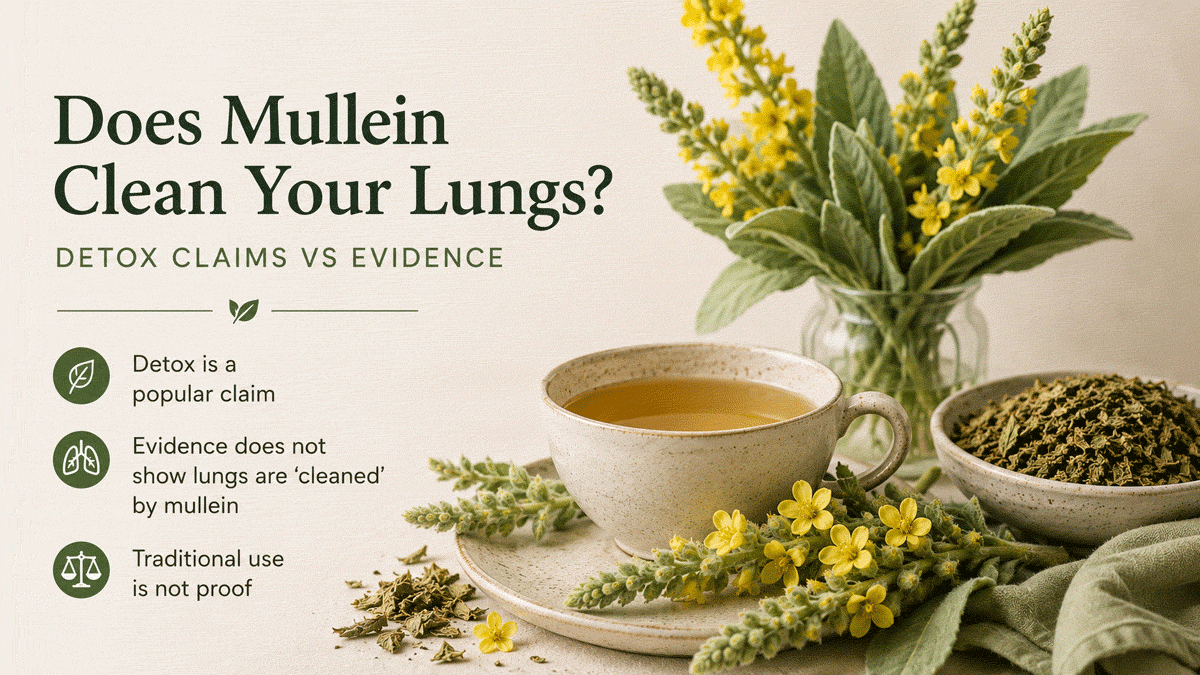
Quick answer: There is no good clinical evidence that mullein “cleans,” detoxifies or repairs the lungs. Mullein has a long traditional association with cough, mucus and respiratory comfort, but that is different from proving that it removes tar, toxins or damaged tissue from the lungs.
The more accurate way to think about mullein is this: it may have a traditional role in respiratory herbal use, while claims about “lung detox,” “lung cleansing” and “removing toxins” go beyond the available human evidence.
Does mullein actually clean your lungs?
| Claim | What the evidence supports |
|---|---|
| “Mullein detoxes the lungs” | Not established by human clinical trials. |
| “Mullein removes cigarette tar” | No good evidence shows that mullein physically removes tar from lung tissue. |
| “Mullein repairs damaged lungs” | No clinical evidence shows that mullein reverses structural lung damage. |
| “Mullein helps mucus” | Mullein has a traditional expectorant reputation, but reliable mucus-clearing effects in humans remain unproven. |
| “More coughing means detox” | A change in coughing or mucus does not prove that toxins are leaving the lungs. |
Short answer: There is no good clinical evidence showing that mullein can literally clean, detox or flush toxins from your lungs. Mullein has a genuine history of traditional respiratory use, and laboratory research has identified interesting plant compounds, but those facts do not establish a human “lung cleanse” effect.
This distinction matters because searches for “does mullein clean your lungs,” “mullein lung detox” and “mullein lung cleanse” often lead to much stronger claims than the available evidence supports.
In this guide, we separate traditional herbal use from modern detox marketing and look at what is actually known about mullein and lung health.
What Does “Cleaning Your Lungs” Actually Mean?
“Cleaning the lungs” sounds straightforward, but it is not a clearly defined medical outcome.
Depending on who is using the phrase, a lung cleanse might supposedly mean:
- removing mucus;
- removing cigarette tar;
- eliminating nicotine;
- flushing out environmental pollutants;
- removing unspecified “toxins”;
- reducing inflammation;
- repairing damaged lung tissue;
- or improving breathing.
These are very different biological processes.
A product cannot reasonably be described as a proven “lung cleanser” unless the specific effect being claimed has actually been measured in people.
This is one reason the phrase lung detox should be treated cautiously.
Does Mullein Clean Your Lungs?
There is currently no strong human clinical evidence showing that mullein physically cleans substances out of lung tissue.
Mullein’s reputation comes largely from its long history in traditional respiratory herbal practice.
The European Medicines Agency recognizes long-standing traditional use of mullein flower for relief of sore throat associated with dry cough and cold.
However, EMA also states that the evidence is based on traditional use and notes the lack of clinical studies with mullein flower medicines.
That is very different from demonstrating that mullein:
- removes toxins from lungs;
- removes cigarette tar;
- detoxifies lung tissue;
- clears pollutants from the lungs;
- or repairs damaged airways.
Mullein has a traditional respiratory history, but a clinically proven “lung cleanse” has not been established.
For the broader evidence overview, see Is Mullein Good for Your Lungs? What the Evidence Actually Says.
Is Mullein a Lung Detox?
There is no established clinical definition of a mullein lung detox.
The word “detox” is often used in wellness marketing without identifying:
- which toxin is being removed;
- where that toxin is located;
- how removal is measured;
- how quickly removal occurs;
- or whether the result improves health.
Without those details, “detox” can become more of a marketing concept than a measurable medical claim.
There is no good evidence showing that taking mullein causes the lungs to eliminate a defined toxin faster than they otherwise would.
Can You Detox Your Lungs?
The lungs have their own biological defense and clearance mechanisms.
The respiratory tract uses several processes to deal with inhaled material, including mucus, cilia and immune defenses.
The American Lung Association describes the lungs as self-cleaning organs and warns against quick-fix lung detox products.
Rather than relying on teas, supplements or inhaled products to reverse exposure, the more important strategy is to reduce continued exposure to harmful substances.
Examples include:
- cigarette smoke;
- secondhand smoke;
- vaping aerosols;
- occupational dust;
- and harmful air pollutants.
This does not mean the lungs instantly return to their previous condition after exposure stops.
It means that avoiding further exposure is fundamentally different from trying to “flush” the lungs with a commercial detox product.
How Do the Lungs Normally Clear Inhaled Material?
The respiratory system is not simply an empty container where contaminants accumulate until an herbal product washes them away.
It has multiple protective mechanisms.
Mucus
Mucus helps trap particles and microorganisms that enter the respiratory tract.
Cilia
Tiny hair-like structures lining parts of the airways help move mucus and trapped material upward.
Coughing
Cough is another mechanism that can help expel material from the respiratory tract.
Immune defenses
Specialized cells and immune processes also respond to inhaled particles and microorganisms.
These mechanisms are complex, and different exposures can affect them differently.
Why Did Mullein Become Associated With Lung Cleansing?
Mullein’s modern “lung cleanse” reputation appears to combine several older ideas.
Historically, mullein has been associated with:
- cough;
- throat discomfort;
- traditional expectorant use;
- respiratory herbal preparations;
- and soothing herbal teas.
Over time, these traditional descriptions have sometimes been expanded into modern claims about:
- detoxification;
- removing tar;
- lung repair;
- and reversing damage.
That expansion is the problem.
A traditional association with cough does not automatically establish a detoxification mechanism.
What Does Scientific Research on Mullein Show?
Verbascum thapsus has been the subject of laboratory and phytochemical research.
A 2022 scientific review describes mullein as containing compounds including:
- flavonoids;
- iridoids;
- phenylethanoid glycosides;
- phenylpropanoid glycosides;
- saponins;
- and other plant constituents.
Experimental research has explored properties including:
- antioxidant activity;
- anti-inflammatory activity;
- antimicrobial activity;
- antiviral activity;
- and other biological effects.
This research is scientifically interesting.
However, laboratory activity does not prove that taking mullein removes toxins from human lungs.
Read our Mullein Research hub for more on the difference between laboratory evidence and human clinical evidence.
Does Antioxidant Activity Mean Mullein Detoxes the Lungs?
No.
This is a common leap in reasoning.
If an extract demonstrates antioxidant activity in an experimental system, that does not automatically mean:
- the same amount reaches human lung tissue;
- the same effect occurs after drinking tea;
- the effect occurs after taking a supplement;
- toxins are physically removed;
- or damaged tissue is repaired.
Antioxidant activity and “lung detoxification” are not interchangeable concepts.
Does Mullein Remove Toxins From the Lungs?
There is no strong clinical evidence showing that mullein removes undefined “toxins” from the lungs.
A scientifically meaningful claim would need to identify a specific substance and demonstrate that a defined mullein preparation changes its concentration, clearance or health effects in people.
Broad statements such as:
“Mullein pulls toxins out of your lungs”
do not currently have that level of evidence behind them.
Does Mullein Remove Tar From the Lungs?
There is no good evidence showing that mullein removes cigarette tar from lung tissue.
This is especially relevant because many online lung-cleanse claims are aimed at smokers and former smokers.
Cigarette smoke contains a complex mixture of chemicals and particles, and smoking can cause biological changes throughout the respiratory system.
Those effects cannot accurately be reduced to the idea that the lungs simply contain a layer of tar that an herbal tea can wash away.
For the smoking-specific evidence, see Mullein for Smokers: Can It Clean or Repair Your Lungs?.
Does Mullein Remove Nicotine From Your Lungs?
There is no evidence showing that mullein removes nicotine from the lungs.
Nicotine does not simply remain indefinitely inside lung tissue waiting to be “cleansed” by an herb.
After nicotine enters the body, it is distributed and metabolized through normal physiological processes.
Claims that mullein tea or another mullein product specifically extracts nicotine from the lungs are unsupported.
Does Mullein Clear Mucus From Your Lungs?
Mucus is one area where mullein’s traditional reputation is more understandable.
Historical herbal literature has described mullein as a traditional expectorant.
But there is still not enough high-quality human evidence showing that mullein reliably thins mucus, breaks up phlegm or increases mucus clearance.
Most importantly, clearing mucus would not prove that mullein “detoxifies” the lungs.
Mucus and toxins are not synonyms.
See Does Mullein Help With Mucus? What the Evidence Says for the full analysis.
Does Mullein Tea Clean Your Lungs?
Mullein tea is one of the formats most commonly associated with lung-cleanse claims.
Drinking a warm herbal beverage may be personally soothing, and mullein has a long history of respiratory herbal use.
But there is no good human evidence showing that mullein tea:
- flushes toxins from lung tissue;
- removes cigarette tar;
- removes nicotine;
- reverses pollution exposure;
- or repairs damaged lungs.
Tea should therefore be understood as an herbal preparation, not as a proven lung-cleaning procedure.
Read Mullein Tea for Lungs: Benefits, Evidence & How It’s Used for more information.
What About Mullein Drops, Tinctures and Extracts?
Extracts and tinctures should not automatically be treated as stronger or more effective versions of tea.
Different preparations can vary substantially in:
- plant part;
- extraction method;
- concentration;
- solvent;
- serving size;
- and chemical composition.
Even a concentrated preparation requires human evidence before it can reasonably be said to detoxify the lungs.
Higher concentration does not turn an unproven effect into a proven one.
Do Mullein Inhalers Clean the Lungs?
There is no strong clinical evidence showing that mullein inhalers clean or detox the lungs.
Inhaled products also raise a separate evidence question because inhalation is fundamentally different from drinking herbal tea.
Traditional oral use of mullein flower cannot automatically establish the safety or effectiveness of:
- botanical inhalers;
- heated aerosol products;
- vape-style devices;
- or other inhaled preparations.
The American Lung Association specifically cautions against assuming that inhaled “detox” products are harmless simply because they contain natural ingredients.
For a format-by-format comparison, see How to Use Mullein.
Can Mullein Repair Your Lungs?
There is not sufficient clinical evidence showing that mullein repairs damaged human lung tissue.
“Repair” can refer to many different outcomes, including:
- healing airway injury;
- restoring lung function;
- reversing structural damage;
- reducing permanent scarring;
- or reversing smoking-related disease.
These are major medical claims.
Laboratory antioxidant or anti-inflammatory findings do not demonstrate that these outcomes occur in people who use mullein.
Can Mullein Reverse Smoking Damage?
There is no evidence that mullein reverses the full spectrum of lung damage caused by smoking.
Smoking can contribute to chronic respiratory symptoms, impaired lung function, COPD, cancer and other serious disease.
According to the U.S. Centers for Disease Control and Prevention, quitting smoking reduces respiratory symptoms and lowers the risk of several smoking-related diseases.
For people who already have COPD, quitting also slows disease progression and loss of lung function over time.
Those documented benefits are fundamentally different from unsupported claims that an herb can erase smoking exposure.
What Actually Helps Your Lungs After Smoking?
The most important step is removing continued exposure to cigarette smoke.
CDC identifies quitting smoking as one of the most important actions a person who smokes can take to reduce the risk of respiratory disease.
Other reasonable lung-health measures include:
- avoiding secondhand smoke;
- reducing exposure to harmful air pollutants where possible;
- following medical treatment for diagnosed respiratory conditions;
- maintaining regular physical activity when medically appropriate;
- and seeking evaluation for persistent respiratory symptoms.
No herbal supplement should be presented as a substitute for stopping harmful exposure.
Can Your Lungs Heal Themselves?
Some recovery can occur after harmful exposure stops, but the degree and timing depend on the type and extent of injury.
The American Lung Association describes the lungs as self-cleaning organs that begin healing after they are no longer exposed to pollutants.
That does not mean every form of lung damage is completely reversible.
For example, established chronic respiratory disease or structural damage may not simply disappear after exposure ends.
“The lungs can recover from some effects” and “a detox product reverses all damage” are very different claims.
Mullein Lung Cleanse Before and After Claims
Before-and-after stories are common in wellness marketing, but they are weak evidence on their own.
If someone reports:
- coughing more mucus;
- breathing more easily;
- feeling less chest heaviness;
- or feeling “cleaner” after taking mullein,
that experience does not establish that toxins were removed from lung tissue.
Symptoms can change for many reasons, and subjective improvement is different from a measured detoxification effect.
Does Coughing Up Mucus Mean Your Lungs Are Detoxing?
Not necessarily.
Coughing mucus is part of normal airway clearance in many situations.
It can occur with respiratory infections, smoking, irritation and a variety of airway conditions.
Seeing mucus after taking a product does not prove that the mucus contains previously stored toxins or that a “detox” is occurring.
Can Mullein Treat COPD, Asthma or Bronchitis?
Mullein should not be presented as a proven treatment for COPD, asthma or bronchitis.
These conditions have different causes, mechanisms and treatment approaches.
Traditional use for cough does not establish treatment effectiveness for chronic respiratory disease.
People with persistent wheezing, breathing difficulty or diagnosed lung disease should not replace appropriate medical treatment with a lung-cleanse product.
Red Flags in Mullein Lung Detox Marketing
Be especially cautious when a product promises that mullein can:
- “detox your lungs in 3 days”;
- “remove years of cigarette tar”;
- “flush nicotine from lung tissue”;
- “reverse COPD naturally”;
- “repair damaged lungs”;
- “restore lungs to new”;
- or “cleanse every toxin from your respiratory system.”
Claims this specific should be supported by strong human evidence.
At present, that evidence does not exist for mullein.
Traditional Use vs a Modern Lung Detox Claim
| Statement | Evidence status |
|---|---|
| Mullein flower has a history of traditional respiratory use | Supported |
| Mullein flower has traditional use for sore throat associated with dry cough and cold | Recognized by EMA on the basis of long-standing use |
| Mullein contains biologically active plant compounds | Supported by phytochemical and experimental research |
| Mullein is clinically proven to clean the lungs | No |
| Mullein removes cigarette tar from the lungs | Not established |
| Mullein removes nicotine from lung tissue | Not established |
| Mullein detoxifies environmental pollutants from the lungs | Not established |
| Mullein repairs smoking-related lung damage | Not established |
What Is a More Accurate Way to Talk About Mullein?
Instead of describing mullein as a proven lung cleanser, a more evidence-aware description would be:
Mullein is a plant with a long history of traditional respiratory use and interesting experimental research, but claims that it detoxifies, cleans or repairs human lungs have not been established by strong clinical evidence.
This wording respects the plant’s traditional history without transforming it into something science has not demonstrated.
When Should Lung Symptoms Be Medically Evaluated?
A “lung cleanse” should not delay evaluation of significant respiratory symptoms.
Seek appropriate medical attention for symptoms such as:
- difficulty breathing;
- significant or worsening shortness of breath;
- chest pain;
- coughing up blood;
- persistent wheezing;
- a persistent unexplained cough;
- or other concerning respiratory changes.
These symptoms require evaluation of their cause rather than assuming the lungs simply need to be detoxified.
Does Mullein Clean Your Lungs? The Bottom Line
Mullein has a real history in traditional herbal respiratory practice, and modern laboratory research has identified a variety of interesting phytochemicals in the plant.
But neither fact proves a lung-cleaning effect.
There is currently no strong clinical evidence showing that mullein cleans, detoxifies or flushes toxins, tar or nicotine from human lungs.
It also has not been proven to reverse chronic lung disease or repair smoking-related lung damage.
The most useful way to understand mullein is to separate its documented traditional use from modern detox claims that go beyond the evidence.
Next, explore Mullein Safety: Side Effects, Risks & What to Know.
Frequently Asked Questions
Does mullein detox your lungs?
There is no good clinical evidence showing that mullein detoxifies human lungs or accelerates the removal of specific toxins from lung tissue.
Does mullein remove tar from your lungs?
No reliable human evidence shows that mullein removes cigarette tar from lung tissue.
Does mullein remove nicotine from the lungs?
There is no evidence that mullein specifically removes nicotine from the lungs. Nicotine is absorbed, distributed and metabolized by the body through normal physiological processes.
Does mullein clean smokers’ lungs?
Mullein has traditional respiratory uses, but it has not been shown to remove smoking residue or reverse smoking-related lung damage.
Does mullein tea clean your lungs?
Mullein tea has traditional herbal uses, but there is no strong clinical evidence showing that drinking it cleans toxins, tar or pollutants from lung tissue.
Can mullein repair damaged lungs?
There is insufficient human evidence showing that mullein repairs structural lung damage or restores lost lung function.
Which Mullein Form Is Used for “Lung Cleansing”?
There is no clinically proven mullein format for cleaning or detoxifying the lungs. Tea, flower, leaf, extract, capsules, smoke and vape aerosol are different preparations, so evidence from one form should not automatically be applied to another.
- Mullein flower: The plant part with the clearest formal traditional-use documentation. The recognized use concerns sore throat associated with dry cough and cold, not lung detoxification. See Mullein Flower for Lungs.
- Mullein tea: A traditional oral preparation, but there is no good human evidence showing that tea removes tar, nicotine or pollution particles from lung tissue. See Mullein Tea for Lungs.
- Mullein extract: Extracts may be more concentrated, but concentration does not establish a lung-detox effect. See Mullein Extract for Lungs.
- Mullein capsules: Capsules may contain leaf powder, flower, extract or blends. They have not been shown to remove toxins or cigarette tar from the lungs. See Mullein Capsules for Lungs.
- Smoking mullein: Burning plant material creates smoke and combustion products. Traditional oral-use evidence does not establish benefits from inhaling mullein smoke. See Mullein Smoking.
- Mullein vape: Heated aerosol is fundamentally different from tea or oral extracts. Nicotine-free does not automatically mean respiratory-risk-free. See Mullein Vape: Safety & Evidence.
For the full format comparison, see How to Use Mullein for Lungs.
Mullein for Chest Congestion vs Lung Detox
Chest congestion, mucus and “lung detox” are often mixed together online, but they are not the same thing.
Chest congestion usually describes mucus, phlegm, coughing or a heavy feeling in the chest. These symptoms can occur with respiratory infections, bronchitis, asthma, COPD and other conditions.
Even if an herb changed mucus symptoms, that would not demonstrate that tar, nicotine or unspecified toxins were being removed from lung tissue.
See Mullein for Chest Congestion.
More Questions About Mullein and Lung Cleansing
What is the best way to take mullein for lungs?
There is no clinically proven mullein format for cleansing the lungs. Mullein flower tea is closest to the best-documented traditional use for dry cough and cold-related throat discomfort, but that does not establish a lung-detox effect. See How to Use Mullein for Lungs.
Can mullein extract detox the lungs faster than tea?
There is no evidence showing that concentrated mullein extract detoxifies the lungs faster than tea. Higher concentration does not make an unproven detox effect clinically proven.
Are mullein capsules better than tea for cleaning the lungs?
No clinical evidence shows that mullein capsules are better than tea for lung cleansing. Neither has been shown to remove cigarette tar or unspecified toxins from lung tissue.
Can mullein help clear chest congestion?
Mullein has a traditional expectorant reputation, but strong human evidence showing reliable mucus or chest-congestion clearance is limited. Chest congestion is also not the same thing as detoxification.
For the question of irreversible COPD or emphysema damage, see Mullein for COPD.
For root-specific lung-cleansing claims, see Mullein Root for Lungs.
References
1. European Medicines Agency.
Verbasci flos — Mullein Flower.
European Medicines Agency, Committee on Herbal Medicinal Products.
2. European Medicines Agency.
Assessment report on Verbascum thapsus L., Verbascum densiflorum Bertol. and Verbascum phlomoides L., flos.
EMA/HMPC.
3. Gupta A, Atkinson AN, Pandey AK, Bishayee A.
Health-promoting and disease-mitigating potential of Verbascum thapsus L. (common mullein): A review.
Phytotherapy Research. 2022;36(4):1507–1522.
DOI: 10.1002/ptr.7393.
4. American Lung Association.
Can You Detox Your Lungs?
5. Centers for Disease Control and Prevention.
Benefits of Quitting Smoking.