
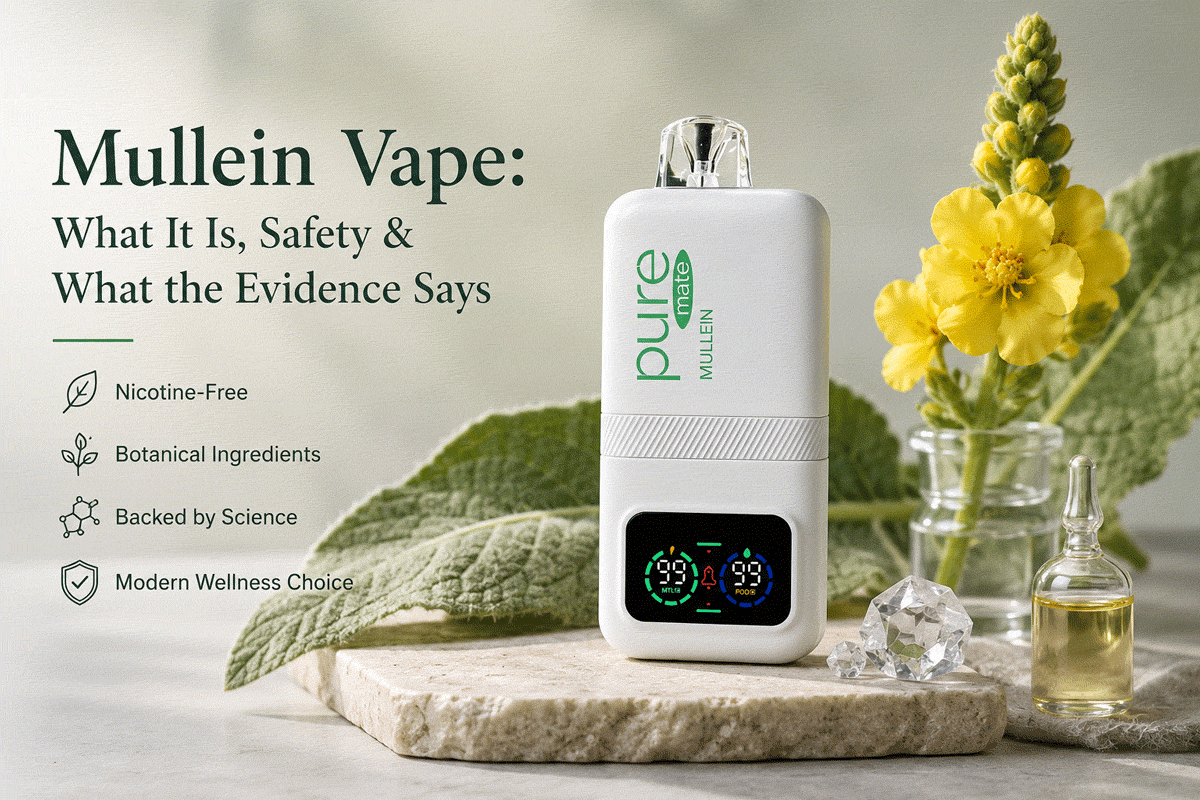
Quick answer: A mullein vape is a modern inhalation product marketed around mullein or mullein-derived ingredients. Some products are nicotine-free, but that does not establish that inhaling mullein aerosol is proven to improve lung health. Mullein has a long traditional respiratory history, especially in tea and flower preparations, while direct human evidence for vaping mullein remains limited.
What matters most:
- Mullein’s traditional use does not automatically transfer to vaping.
- Nicotine-free does not mean risk-free.
- There is no strong clinical evidence that mullein vape “cleans,” repairs or detoxifies lungs.
- A mullein vape is different from smoking dried mullein leaf.
- Product ingredients and device design matter as much as the word “mullein.”
Short answer: A mullein vape is generally an electronic inhalation product marketed around mullein and often positioned as a nicotine-free alternative to conventional vaping. However, traditional evidence for mullein flower does not prove that vaping mullein improves lung health, treats cough, cleans the lungs or is risk-free.
The important distinction is that traditional mullein use and mullein vaping are different routes of exposure.
Mullein has a documented history as an herbal preparation, especially in connection with dry cough and throat discomfort. But turning a botanical ingredient into an inhaled aerosol creates a different safety and evidence question.
This guide explains what a mullein vape is, why these products have become popular, what “nicotine-free” actually tells you, and what current evidence can — and cannot — support.
What Is a Mullein Vape?
There is no single standardized medical definition of a mullein vape.
In general, the term is used for vape-style devices marketed as containing mullein or mullein-derived botanical ingredients.
Products may also be described using terms such as:
- mullein diffuser;
- mullein inhaler;
- botanical vape;
- herbal vape;
- nicotine-free vape;
- or wellness diffuser.
These terms do not necessarily describe identical products.
For this article, mullein vape refers primarily to an electronic device that heats a liquid or formulation and creates an aerosol that the user inhales.
This is different from:
- drinking mullein tea;
- taking an oral extract;
- using a capsule;
- or using a non-heated aroma inhaler.
What Is Usually Inside a Mullein Vape?
There is no universal formulation for products sold as mullein vapes.
Depending on the manufacturer, a product may contain different combinations of:
- mullein-derived ingredients;
- carrier ingredients;
- flavorings;
- botanical extracts;
- and other additives.
The word “mullein” on a product therefore does not tell you everything about what is being inhaled.
It also does not automatically tell you:
- which Verbascum species was used;
- whether leaf or flower was used;
- the amount of botanical material present;
- how it was extracted;
- what other ingredients are present;
- or how those ingredients behave when heated.
Product-specific ingredient transparency matters.
Do Mullein Vapes Contain Nicotine?
Many products marketed specifically as mullein vapes are promoted as nicotine-free.
But “mullein vape” itself is not a regulated ingredient definition that guarantees the absence of nicotine.
Consumers should therefore evaluate the labeling and documentation for the specific product rather than assuming every product with “mullein” in the name has the same formulation.
If a product genuinely contains no nicotine, that removes nicotine exposure from that particular product.
But:
Nicotine-free does not automatically mean inhalation-risk-free.
Nicotine is only one possible component of an inhaled aerosol.
Is a Mullein Vape the Same as a Regular Vape?
Not necessarily.
Conventional electronic cigarettes often contain nicotine, although nicotine-free electronic vaping products also exist.
A mullein vape may instead be marketed around botanical ingredients and the absence of nicotine or tobacco.
But the devices can still share an important characteristic:
They may use heat to create an aerosol that is inhaled into the respiratory tract.
This means differences in ingredients do not eliminate the need to evaluate inhalation safety.
Is a Mullein Vape the Same as Smoking Mullein?
No.
Smoking involves combustion — burning plant material and inhaling the resulting smoke.
Electronic vaping generally involves heating a formulation to create an aerosol without directly burning dried plant material.
Smoke and aerosol are not identical exposures.
But neither should automatically be assumed harmless simply because the source material is botanical.
Why Are Mullein Vapes Becoming Popular?
Interest in mullein vapes appears to sit at the intersection of several trends:
- interest in nicotine-free alternatives;
- growing awareness of mullein as a respiratory herb;
- interest in botanical wellness products;
- people trying to move away from nicotine vaping;
- and social-media claims about “lung cleansing.”
Mullein’s historical connection with cough and respiratory herbal practice makes it particularly attractive for products aimed at people concerned about their lungs.
But that historical reputation can also make exaggerated claims sound more scientifically established than they really are.
What Is the Traditional Evidence for Mullein?
Mullein has a genuine history in European herbal medicine.
The European Medicines Agency has evaluated mullein flower from several Verbascum species.
The European herbal monograph recognizes a traditional use of mullein flower for relief of sore throat associated with dry cough and cold.
However, two details are especially important.
First, the monograph describes the preparation as herbal tea for oral use.
Second, EMA notes that clinical studies establishing efficacy are lacking.
This means the traditional evidence does not establish that aerosolized or vaped mullein:
- produces the same effects;
- has the same safety profile;
- reaches the same tissues in the same way;
- or should be used for the same purpose.
Our Mullein Research guide explains the difference between traditional use and clinical evidence.
Does Traditional Mullein Use Prove That Mullein Vapes Work?
No.
This is probably the most important point in this article.
Evidence cannot automatically be transferred between different routes of administration.
For example:
| Format | Route |
|---|---|
| Mullein tea | Consumed orally |
| Mullein extract | Usually consumed orally |
| Mullein capsule | Consumed orally |
| Mullein vape | Aerosol inhaled into respiratory tract |
A botanical preparation that has been used orally for generations cannot automatically be assumed safe or effective when heated and inhaled.
Are Mullein Vapes Safe?
There is not enough product-specific human evidence to describe mullein vaping as proven safe.
Safety depends on more than whether nicotine is present.
Important variables can include:
- the complete ingredient formulation;
- the heating temperature;
- device materials;
- aerosol composition;
- flavoring ingredients;
- manufacturing quality;
- frequency of use;
- and individual respiratory health.
General public-health guidance on electronic vaping products also emphasizes that inhaled aerosol should not simply be treated as harmless water vapor.
Those warnings are not specific studies of mullein vape products, but they are relevant to evaluating any heated aerosol product.
Is a Nicotine-Free Mullein Vape Safe?
A genuinely nicotine-free product avoids nicotine exposure.
That can be an important difference from a nicotine-containing vape.
However, removing nicotine does not answer questions about every other inhaled ingredient.
For example, a nicotine-free aerosol may still contain:
- carrier compounds;
- flavoring chemicals;
- botanical compounds;
- thermal breakdown products;
- or trace substances related to device materials.
The actual composition depends on the specific product.
Therefore:
“Zero nicotine” describes nicotine content. It does not by itself establish overall respiratory safety.
Does Mullein Vape Help Your Lungs?
There is not strong clinical evidence showing that vaping mullein improves human lung function.
Claims that mullein vape:
- strengthens lungs;
- improves oxygen capacity;
- repairs lung tissue;
- opens the airways;
- or restores lung function
would require controlled human studies demonstrating those outcomes.
Traditional mullein use is not enough to establish them.
For the broader question, read Is Mullein Good for Your Lungs?
Does Mullein Vape Clean Your Lungs?
There is no good clinical evidence showing that vaping mullein cleans or detoxifies the lungs.
Aerosolizing a botanical ingredient does not create a mechanism that has been shown to remove:
- cigarette tar;
- nicotine;
- environmental pollutants;
- or unspecified toxins
from lung tissue.
“Lung cleanse” is therefore much stronger language than the evidence supports.
Read our dedicated guide: Does Mullein Clean Your Lungs? Detox Claims vs Evidence.
Does Mullein Vape Help With Mucus?
Mullein has historically been described as a traditional expectorant.
But that does not establish that inhaling mullein aerosol reliably thins mucus or clears phlegm.
The route of administration is different, and strong clinical evidence for mucus clearance from mullein vape products is lacking.
See Does Mullein Help With Mucus? for the evidence behind the traditional expectorant claim.
Does Mullein Vape Help With Cough?
Mullein flower has a documented traditional use related to dry cough and throat discomfort.
But the European herbal evidence concerns traditional oral preparations, particularly herbal tea.
It does not establish that inhaling aerosolized mullein treats cough.
In fact, inhaled substances can themselves irritate the respiratory tract in some circumstances.
Read Mullein for Cough: Does It Actually Help?
Does Mullein Vape Help Smokers?
Mullein vapes are sometimes marketed toward smokers or former smokers looking for a nicotine-free alternative.
There are two separate questions here:
- Does the product contain nicotine?
- Does the product improve or repair smoking-related lung health?
A nicotine-free product may answer the first question.
It does not establish the second.
There is no good evidence showing that mullein vape:
- removes cigarette tar;
- reverses emphysema;
- repairs smoking-related lung damage;
- or makes continued cigarette smoking safer.
For the smoking-specific discussion, see Mullein for Smokers.
Can Mullein Vape Help You Quit Nicotine?
A nicotine-free device does not deliver nicotine if its labeling and formulation are accurate.
Some adults may be interested in nicotine-free devices because they want to move away from nicotine-containing products.
But this should be separated from a medical smoking-cessation claim.
There is not established clinical evidence demonstrating that mullein vape is an approved or proven treatment for nicotine dependence.
It should therefore not be described as a medically proven smoking-cessation therapy.
Mullein Vape vs Nicotine Vape
| Feature | Mullein Vape | Typical Nicotine Vape |
|---|---|---|
| Nicotine | Often marketed as nicotine-free; check specific product | Commonly contains nicotine |
| Main positioning | Botanical or nicotine-free alternative | Nicotine delivery |
| Creates inhaled aerosol | Usually yes for electronic vape-style products | Yes |
| Clinically proven lung benefit | No | No |
| Long-term respiratory risk fully known | No | No |
Removing nicotine changes one major aspect of the product, but it does not make the entire inhalation question disappear.
Mullein Vape vs Mullein Tea
These two products should not be treated as interchangeable.
Mullein tea is an oral herbal preparation with a documented history of traditional use.
Mullein vape is a modern inhaled product format.
The strongest formal European traditional-use evidence applies to mullein flower tea for oral use, not electronic aerosol inhalation.
Read Mullein Tea for Lungs for a full discussion of tea.
Mullein Vape vs Botanical Aroma Inhaler
Another source of confusion is the use of the word “inhaler.”
Some botanical inhalers do not heat liquid and do not generate vape-style aerosol.
Instead, air may simply pass through an aromatic botanical core.
This is a fundamentally different exposure from an electronic vape.
Consumers should therefore identify how a device actually works rather than relying only on terms such as:
- inhaler;
- diffuser;
- aromatherapy device;
- or vape alternative.
Are Mullein Vape “Benefits” Proven?
Claims about mullein vape benefits should be divided into different evidence levels.
| Claim | Evidence status |
|---|---|
| Mullein has a history of traditional respiratory use | Supported |
| Mullein flower has traditional oral use for dry cough and sore throat | Supported as traditional use |
| Some mullein products are nicotine-free | Product-specific |
| Mullein vape improves lung function | Not established |
| Mullein vape cleans the lungs | Not established |
| Mullein vape clears mucus | Not established |
| Mullein vape repairs smoking damage | Not established |
| Mullein vape is risk-free | Not established |
What Should You Look for When Comparing a Mullein Vape?
If an adult is evaluating a mullein vape product, the marketing headline alone provides very little information.
More useful questions include:
- Does the product clearly disclose its ingredients?
- Does it specify whether nicotine is present?
- Which mullein ingredient is actually used?
- Are other botanical ingredients included?
- What carrier ingredients and flavorings are present?
- Does the company make unsupported medical claims?
- Are manufacturing and contact details clearly available?
Claims such as “detoxes your lungs” or “repairs smoking damage” should be treated especially cautiously.
Red Flags in Mullein Vape Marketing
Be skeptical when a product claims it can:
- clean cigarette tar from the lungs;
- detox the lungs in a few days;
- repair lung tissue;
- reverse COPD;
- treat asthma;
- cure bronchitis;
- increase oxygen levels;
- or make vaping healthy.
These are substantial health claims that require substantial human evidence.
Is “Natural” the Same as Safe to Inhale?
No.
A substance can be natural and still have different effects depending on how it enters the body.
Eating, drinking, applying to the skin and inhaling are different routes of exposure.
This matters especially for botanicals because historical food or tea use does not automatically establish inhalation safety.
The lungs are directly exposed to aerosol ingredients when a product is inhaled.
Who Should Be Particularly Cautious?
Extra caution is reasonable for people with:
- asthma;
- COPD;
- significant respiratory symptoms;
- known allergies to botanical ingredients;
- or other diagnosed lung conditions.
Young people, people who are pregnant, and adults who do not use vaping or tobacco products should not begin vaping on the assumption that a botanical product is beneficial for the lungs.
When Should Respiratory Symptoms Be Evaluated?
A mullein vape should not be used to delay evaluation of significant respiratory symptoms.
Seek appropriate medical care for symptoms such as:
- difficulty breathing;
- worsening shortness of breath;
- chest pain;
- coughing up blood;
- persistent wheezing;
- persistent unexplained cough;
- or a significant change in respiratory symptoms.
Where Can You Compare Modern Mullein Inhalation Products?
MulleinForLungs.com focuses on educational information and evidence.
Readers who specifically want to see examples of modern commercial mullein inhalation products can visit PureMullein.com, a related commercial website.
This link is provided for product information and comparison. It should not be interpreted as evidence that a mullein vape treats, cleans, detoxifies or repairs the lungs.
Mullein Vape: The Bottom Line
Mullein is a real botanical with a legitimate history in traditional respiratory herbal practice.
Mullein vapes are a much newer product category.
Those two facts should not be confused.
Traditional evidence for orally consumed mullein flower does not establish the safety or effectiveness of vaping mullein.
A genuinely nicotine-free mullein vape may avoid nicotine exposure, but that alone does not prove that the aerosol is harmless or that the product provides a lung-health benefit.
The most accurate position is therefore:
Mullein vape is a modern botanical inhalation format with growing consumer interest, but claims about lung cleansing, repair, mucus clearance or respiratory benefits remain inadequately supported by human clinical evidence.
For broader safety information, continue with our Mullein Safety Guide.
What Are the Claimed Benefits of a Mullein Vape?
Mullein vapes are often marketed around ideas such as botanical inhalation, nicotine-free use, cough support, mucus relief or general lung wellness.
It is important to separate those marketing or consumer-interest claims from outcomes that have actually been demonstrated in human clinical studies.
At present, there is not strong clinical evidence showing that vaping mullein:
- improves lung function;
- opens narrowed airways;
- repairs lung tissue;
- clears cigarette tar;
- removes toxins from the lungs;
- reliably clears mucus or phlegm;
- or treats respiratory disease.
The traditional evidence surrounding mullein primarily concerns oral herbal preparations, especially mullein flower. It should not automatically be transferred to heated aerosol products.
Mullein Vape Side Effects and Safety Questions
There is no single standardized mullein-vape formulation, so potential effects depend on the ingredients, device and heating conditions of the individual product.
A product marketed as nicotine-free avoids nicotine exposure only if the labeling is accurate. That does not answer every other inhalation-safety question.
Depending on formulation and device, inhaled aerosol may expose users to carrier compounds, flavoring ingredients, botanical compounds, thermal breakdown products, particles or substances associated with device materials.
The CDC notes that e-cigarette aerosol is not simply harmless water vapor and may contain potentially harmful substances. This general vaping evidence is relevant to evaluating heated botanical aerosol products, although it is not specific clinical evidence about mullein vape products.
Anyone who experiences new or worsening coughing, wheezing, chest pain or shortness of breath after using an inhaled product should stop using it and seek appropriate medical evaluation, especially if symptoms are severe or persistent.
Mullein Vape vs Mullein Tea
Mullein vape and mullein tea are fundamentally different exposure routes.
Mullein tea is swallowed. Traditional European documentation for mullein flower concerns oral herbal preparations associated with dry cough and cold-related throat discomfort.
Mullein vape creates an aerosol that is inhaled directly into the respiratory tract.
Because the routes are different, evidence for tea cannot be used as proof that vaping mullein has the same effects or safety profile.
Compare the evidence in Mullein Tea for Lungs and Mullein Flower for Lungs.
Mullein Vape vs Smoking Mullein
Smoking and vaping are not the same process.
Smoking mullein burns plant material and produces combustion smoke. A vape-style device heats a liquid or formulation to produce an aerosol without traditional combustion.
That difference does not establish that either route provides a lung-health benefit.
Traditional mullein evidence does not show that inhaling smoke or aerosol repairs or detoxifies the lungs.
For the combustion-specific discussion, see Mullein Smoking: Is Smoking Mullein Safe for Your Lungs?.
Can a Nicotine-Free Mullein Vape Be Called Safe?
“Nicotine-free” and “safe for the lungs” are not interchangeable statements.
A genuinely nicotine-free product avoids nicotine exposure, which is an important distinction from a nicotine-containing vape. But respiratory safety also depends on the other substances being heated and inhaled.
This is why a nicotine-free label by itself cannot establish that a mullein vape is harmless or beneficial to the lungs.
For the broader comparison of mullein formats, see How to Use Mullein for Lungs.
Frequently Asked Questions
What is a mullein vape?
A mullein vape is generally a vape-style inhalation product marketed around mullein or mullein-derived botanical ingredients. Exact formulations vary between products.
Do mullein vapes have nicotine?
Many mullein vapes are marketed as nicotine-free, but the term “mullein vape” itself does not guarantee a specific formulation. Check the information for the individual product.
Are mullein vapes safe?
There is not enough product-specific human evidence to describe mullein vaping as proven safe. A nicotine-free formulation avoids nicotine exposure but does not establish the safety of every other inhaled ingredient.
Are mullein vapes good for your lungs?
There is no strong clinical evidence showing that mullein vapes improve lung function, repair lung tissue or provide a general lung-health benefit.
Do mullein vapes clean your lungs?
No good clinical evidence shows that mullein vape removes tar, nicotine, pollutants or other toxins from lung tissue.
Does mullein vape help with mucus?
Mullein has a traditional expectorant reputation, but there is insufficient clinical evidence showing that vaping mullein reliably clears mucus or phlegm.
Is mullein vape better than nicotine vape?
A genuinely nicotine-free product avoids nicotine exposure, which is an important difference. However, that does not establish that the remaining aerosol is harmless or provides health benefits.
Is mullein vape the same as mullein tea?
No. Mullein tea is consumed orally, while a vape creates an aerosol that is inhaled. Traditional evidence for mullein tea cannot automatically be transferred to vaping.
More Questions About Mullein Vape
What are the benefits of mullein vape?
Mullein vapes are marketed around botanical or nicotine-free use, but strong human clinical evidence has not established lung-health benefits from vaping mullein. Traditional mullein evidence mainly concerns oral preparations rather than heated aerosol.
Does mullein vape have side effects?
There is not enough product-specific clinical evidence to define a complete side-effect profile for mullein vapes. Effects may depend on the botanical ingredients, carriers, flavorings, device materials and heating conditions used in a particular product.
Is mullein vape safer than smoking mullein?
Smoking involves combustion, while vaping typically creates aerosol by heating a liquid or formulation. Avoiding combustion changes the exposure, but that alone does not prove that mullein vaping is safe or beneficial to the lungs.
Is mullein vape better than mullein tea?
There is no clinical evidence showing that vaping mullein is superior to drinking mullein tea. Tea and aerosol inhalation are different exposure routes, and traditional evidence for oral mullein preparations cannot be transferred automatically to vaping.
Can mullein vape clear mucus or phlegm?
Mullein has a traditional expectorant reputation, but there is insufficient clinical evidence showing that vaping mullein reliably clears mucus or phlegm. See Mullein for Mucus.
Can mullein vape clean smokers’ lungs?
No good clinical evidence shows that a mullein vape removes cigarette tar, reverses smoking-related lung damage or detoxifies lung tissue. See Does Mullein Clean Your Lungs?.
What Is a Mullein Vape?
A mullein vape is generally a handheld device that heats a liquid or botanical formulation and creates an aerosol for inhalation.
The term can describe very different products. One product may contain mullein extract, another may use a mullein-inspired botanical blend, and another may contain multiple flavoring or herbal ingredients.
This means two products sold as “mullein vapes” should not automatically be assumed to have the same composition or safety profile.
Mullein Vape Benefits: What Is Actually Proven?
Online discussions commonly claim that mullein vape products can:
- support lung health;
- clear mucus;
- clean the lungs;
- help smokers;
- or provide a more direct way to use mullein.
These claims should be separated from the evidence.
Mullein has a long traditional association with cough, throat discomfort and respiratory use. However, that historical evidence is primarily connected with traditional herbal preparations rather than modern heated aerosols.
There is currently insufficient high-quality human evidence showing that inhaling mullein aerosol provides the same effects as mullein tea, flower preparations or oral extracts.
Does Mullein Vape Help Your Lungs?
There is not enough clinical evidence to conclude that mullein vape products improve lung function or produce a measurable general lung-health benefit.
In particular, there is no good human evidence showing that a mullein vape:
- repairs damaged lung tissue;
- removes cigarette tar;
- detoxifies the lungs;
- reverses smoking-related disease;
- or treats asthma, COPD or another respiratory condition.
For the broader evidence question, see Is Mullein Good for Your Lungs?.
Is Mullein Vape Safe?
There is not enough long-term human evidence to describe mullein vaping as proven safe for the lungs.
Safety depends on more than whether a product contains nicotine.
Important factors include:
- the complete ingredient list;
- carrier ingredients;
- flavoring compounds;
- botanical extracts;
- device temperature;
- coil and heating design;
- manufacturing quality;
- and frequency of use.
A product being labeled “natural,” “herbal” or “nicotine-free” does not by itself establish respiratory safety.
See Mullein Side Effects.
Nicotine-Free Mullein Vape: Is It Different?
Yes. A nicotine-free mullein vape does not expose the user to nicotine from the product formulation.
That distinction matters for people specifically trying to avoid nicotine.
However, nicotine-free and harmless are not the same statement.
The aerosol still depends on the ingredients being heated and the device being used.
Mullein Vape Pen: What Does the Term Mean?
“Mullein vape pen” usually describes the device format rather than a standardized type of mullein preparation.
Products may be:
- disposable;
- rechargeable;
- pre-filled;
- or designed around a botanical inhalation formula.
Because there is no single standardized mullein vape formulation, consumers should compare the actual ingredient list rather than relying only on the product category name.
Mullein Vape vs Smoking Mullein
Vaping and smoking mullein are different forms of exposure.
| Format | What Happens | Main Evidence Issue |
|---|---|---|
| Mullein vape | A liquid or formulation is heated to form aerosol | Limited direct human safety and effectiveness evidence |
| Smoking mullein | Dried plant material is burned and smoke is inhaled | Combustion creates smoke and respiratory irritants |
| Mullein tea | Plant material is infused in water and consumed orally | Traditional use is better documented, but clinical evidence remains limited |
See the dedicated comparison in Mullein Smoking: Can You Smoke Mullein Safely?.
Mullein Vape vs Mullein Tea
Tea and vaping should not be treated as interchangeable delivery methods.
Mullein tea has a much longer traditional-use history. Heated aerosol is a comparatively modern exposure route.
There is currently insufficient evidence showing that vaping mullein produces greater absorption, faster benefits or better lung outcomes than drinking mullein tea.
Mullein Vape vs Tincture or Drops
Mullein tinctures and drops are generally taken orally, while a mullein vape delivers aerosol through inhalation.
These routes differ substantially in:
- how ingredients enter the body;
- the tissues exposed;
- the concentration of ingredients;
- and the available safety evidence.
There is no reliable evidence showing that inhaled mullein is universally “better absorbed” or more effective than oral mullein preparations.
See Mullein Extract, Tincture & Drops.
Does Mullein Vape Clear Mucus?
There is not strong human evidence showing that a mullein vape reliably clears mucus or phlegm.
Mullein has a traditional expectorant reputation, but traditional use of the plant cannot automatically establish the effects of a heated aerosol product.
For the broader mucus question, see Does Mullein Help With Mucus?.
Does Mullein Vape Clean Your Lungs?
No good clinical evidence shows that a mullein vape “cleans” lung tissue.
The lungs already use mucus, cilia, immune cells and other biological mechanisms to handle inhaled particles and secretions.
A change in coughing or mucus after using an inhaled product should not automatically be interpreted as detoxification.
Read Does Mullein Clean Your Lungs?.
Mullein Vape for Smokers
Some smokers look for mullein products because of the plant’s respiratory reputation.
There is no clinical evidence showing that vaping mullein repairs smoking-related lung damage or removes tar deposited from cigarette smoke.
The most important intervention for smoking-related risk remains reducing and stopping exposure to tobacco smoke.
See Mullein for Smokers.
Does Mullein Vape Contain Nicotine?
Some mullein vape products are marketed as nicotine-free, while the broader vape market also includes nicotine products.
Consumers should check the exact product label rather than assuming every device in this category has the same formulation.
If avoiding nicotine is important, look for explicit ingredient and nicotine disclosures from the manufacturer.
Can Mullein Vape Cause Throat Irritation?
Yes, an inhaled aerosol can potentially cause dryness or irritation depending on the product, ingredients and individual user.
Someone who develops persistent throat irritation, worsening cough, chest discomfort or breathing difficulty after using an inhaled product should stop using it and seek appropriate medical advice.
Who Should Be Especially Cautious?
Extra caution is appropriate for people who:
- have asthma;
- have COPD;
- have another chronic lung condition;
- currently have pneumonia, flu or another respiratory infection;
- are pregnant or breastfeeding;
- are under the legal age for the product category;
- or develop respiratory symptoms after inhalation.
Looking for a Nicotine-Free Mullein Inhaler?
Some readers prefer a modern mullein format rather than tea, tinctures or capsules. If you are comparing nicotine-free mullein inhalers and product formats, you can explore the dedicated product information at PureMullein.com.
External product site. Product availability and formulation may change; review the current ingredient information before use.
Mullein Vape FAQ
What is a mullein vape?
A mullein vape is a modern inhalation product marketed around mullein or mullein-derived botanical ingredients. Products vary considerably in formulation and device design.
Are mullein vapes good for your lungs?
There is not enough high-quality human evidence to establish mullein vaping as beneficial for lung function or general lung health.
Are mullein vapes safe?
Long-term safety evidence is limited. Safety depends on the complete ingredient list, device, heating conditions and individual user.
Does mullein vape have nicotine?
Some mullein vape products are specifically marketed as nicotine-free. The exact product label should be checked because formulations differ.
Does mullein vape clean your lungs?
No strong clinical evidence shows that vaping mullein detoxifies or cleans lung tissue.
Does mullein vape help mucus?
Mullein has a traditional expectorant reputation, but there is insufficient evidence showing that inhaled mullein aerosol reliably clears mucus.
Is vaping mullein better than smoking it?
The exposures are different. Smoking creates combustion products, while vaping creates heated aerosol. Neither route should be described as proven beneficial for lung health based on current evidence.
Is mullein vape better than mullein tea?
There is no good clinical evidence showing that vaping mullein is more effective or better absorbed than tea.
Can you vape mullein if you have asthma?
People with asthma should be particularly cautious with inhaled products because airway irritation can trigger symptoms. Mullein vape should not replace prescribed asthma medication.
Related Guides
- Is Mullein Good for Your Lungs?
- Does Mullein Clean Your Lungs?
- Mullein for Mucus
- Mullein for Smokers
- Mullein Smoking
- Mullein Tea for Lungs
- Mullein Extract & Tincture
- Mullein Side Effects
- Mullein Research
References
1. European Medicines Agency.
Verbasci flos — Mullein Flower.
Committee on Herbal Medicinal Products.
2. European Medicines Agency.
European Union herbal monograph on Verbascum thapsus L., Verbascum densiflorum Bertol. and Verbascum phlomoides L., flos.
Traditional preparation described as herbal tea for oral use.
3. European Medicines Agency.
Assessment report on Verbascum thapsus L., Verbascum densiflorum Bertol. and Verbascum phlomoides L., flos.
EMA/HMPC.
4. Gupta A, Atkinson AN, Pandey AK, Bishayee A.
Health-promoting and disease-mitigating potential of Verbascum thapsus L. (common mullein): A review.
Phytotherapy Research. 2022;36(4):1507–1522.
DOI: 10.1002/ptr.7393.
5. Centers for Disease Control and Prevention.
E-Cigarettes (Vapes).
6. Centers for Disease Control and Prevention.
Vaping and Quitting.
Additional Safety Sources
Centers for Disease Control and Prevention.
About E-Cigarettes (Vapes)
Centers for Disease Control and Prevention.
Health Effects of Vaping
European Medicines Agency.
Verbasci flos — Mullein Flower