
1
What is mullein?
Start with the basics: the plant, its traditional respiratory association, and what the evidence can actually tell us.
Explore guide →Clear, evidence-based guides on mullein, respiratory use, safety, and modern formats.

Mullein has a long history of traditional respiratory use, but the online conversation often turns simple claims into big promises. This site focuses on traditional use, current evidence, safety, and modern formats so readers can understand mullein in a clearer, more trustworthy way.
Whether you are brand new to mullein or comparing formats, these entry points help you get the full picture faster.
Start with the basics: the plant, its traditional respiratory association, and what the evidence can actually tell us.
Explore guide →Explore the difference between traditional use, early scientific interest, and limited human clinical evidence.
Explore guide →Compare tea, dried leaf, extracts, capsules and modern inhalation formats side by side.
Explore guide →Understand when caution matters, where claims are overstated, and why “natural” does not mean risk-free.
Explore guide →
For generations, mullein has been connected with coughs, throat comfort and broader respiratory use. That long history helps explain why the plant is still so often discussed in lung-health conversations today.
But history alone is not proof of a modern medical effect. The clearest way to understand mullein is to separate traditional use from laboratory interest and from high-quality human evidence.
Explore the history and researchThe strongest understanding comes from separating what is historically popular, what looks interesting in early research, and what still lacks strong human confirmation.
Mullein has a long record of traditional use for cough and respiratory discomfort across herbal practice.
Modern research has explored compounds in mullein, but much of the interest remains early or indirect.
There is still not enough high-quality human clinical evidence to support many of the strongest online claims.
People encounter mullein in very different forms. Understanding the format matters when comparing tradition, convenience and expectations.
The best-known traditional format for everyday educational exploration.
Learn more →Learn about the leaf itself, how it is described traditionally, and how people use it.
Learn more →A more concentrated format that raises practical questions about use, safety and expectations.
Learn more →A simple and familiar supplement format for readers comparing convenience.
Learn more →See how modern mullein inhalation products differ from tea, smoking and traditional formats.
Learn more →Some readers prefer a more convenient modern mullein format. If you want to explore nicotine-free mullein inhalers and a more product-focused experience, visit PureMullein.com.
Visit PureMullein.com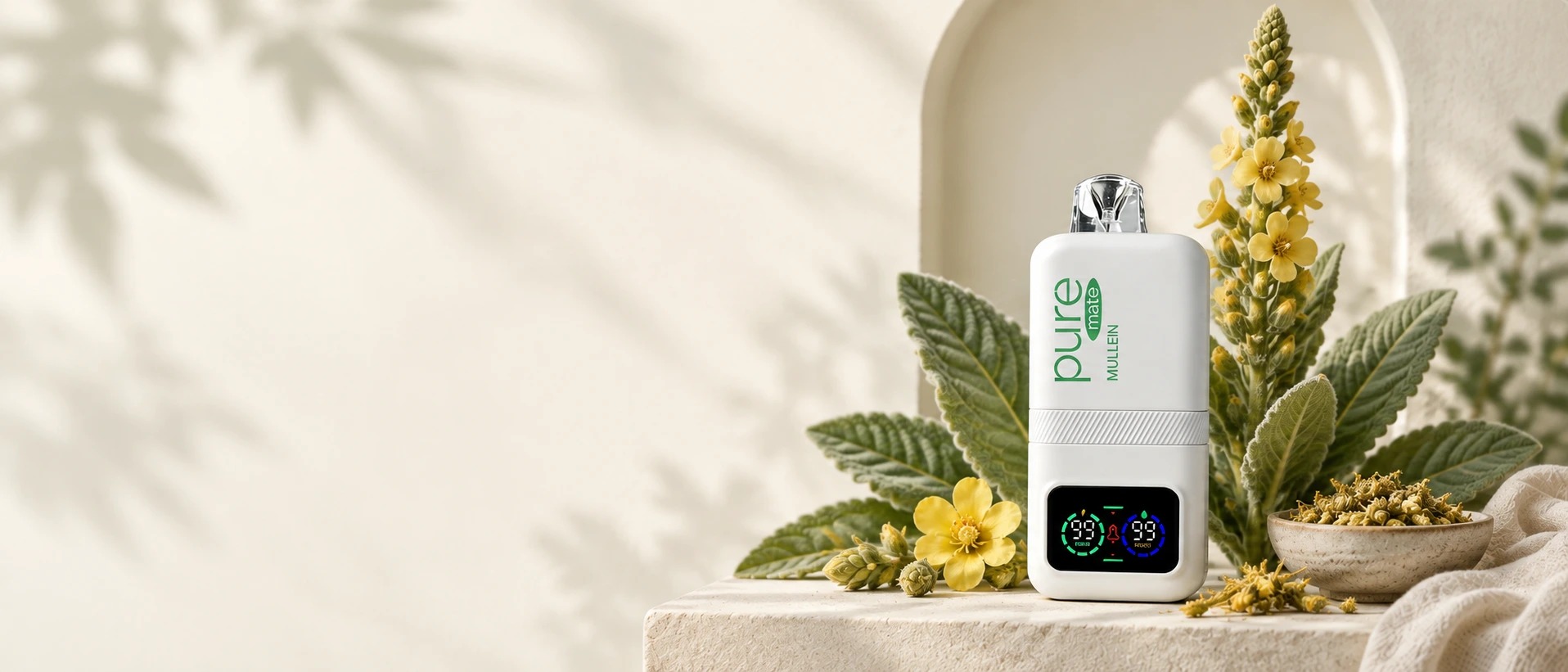
Mullein has a long history of traditional respiratory use, but that is not the same as strong clinical proof that it broadly improves lung health or treats disease. The most accurate answer is more nuanced than many online claims suggest.
Common formats include tea, dried leaf, extracts, capsules and modern inhalation-style products. Each format differs in convenience, tradition, expectations and safety considerations.
That depends on the format, the person and the situation. Many people view mullein as a mild herb, but sensitive individuals can still experience irritation or other issues, and it should not replace medical care.
Possible concerns may include irritation, sensitivity to plant material, and risks related to smoking or combustion. Safety also depends on how the product is prepared and used.
Tea and capsules are more traditional ingestible formats, while inhaler-style products are a modern convenience-focused format. They are not interchangeable, and readers should understand the intended use and limitations of each.
Continue learning with practical guides covering specific symptoms, formats and commonly searched questions.
Is mullein good for a dry cough? Learn about mullein flower, tea, sore throat, leaf vs flower, safety and what traditional-use evidence supports.
Read article →Can mullein help shortness of breath? Learn about dyspnea, asthma, COPD, wheezing, pneumonia, emergency warning signs and what evidence shows.
Read article →Can mullein help wheezing? Learn about asthma, COPD, narrowed airways, mucus, shortness of breath, emergency signs and what evidence shows.
Read article →Read about traditional use, current research, modern product formats and the limitations of what we actually know — all in one place.