
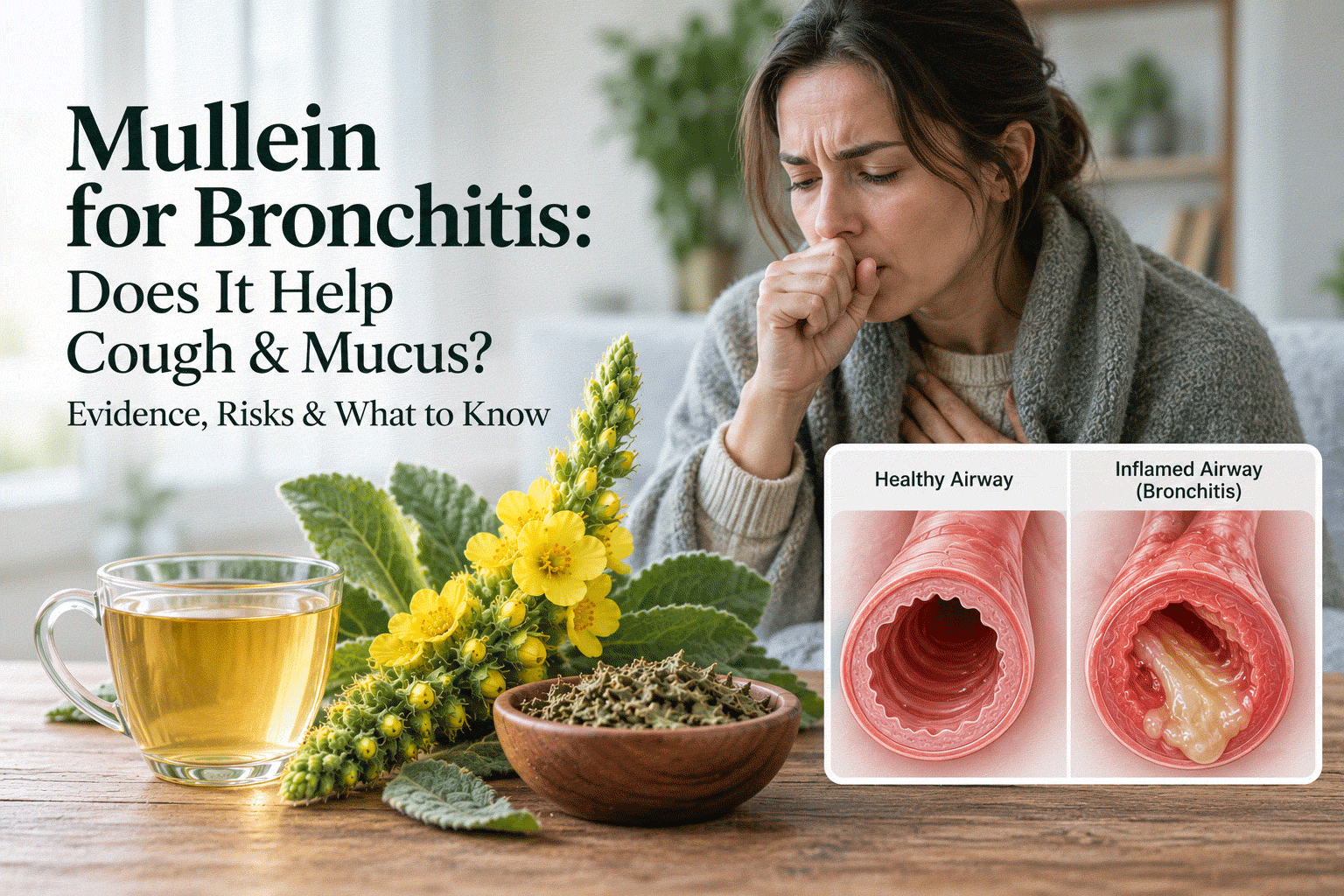
Quick answer: Mullein has a traditional association with cough and respiratory comfort, but there is no good clinical evidence that mullein treats acute bronchitis, cures an airway infection, reverses chronic bronchitis or replaces standard medical treatment.
The first step is to distinguish acute bronchitis from chronic bronchitis. Acute bronchitis is usually a short-term illness, often caused by a virus. Chronic bronchitis is a long-term condition associated with COPD and requires a very different medical approach.
Mullein for bronchitis — quick evidence guide
| Question | Evidence-based answer | Related guide |
|---|---|---|
| Does mullein treat bronchitis? | No strong human clinical evidence shows that mullein cures acute bronchitis or reverses chronic bronchitis. | Mullein & Lung Evidence |
| What is acute bronchitis? | Acute bronchitis is short-term inflammation of the bronchial airways, usually caused by a virus and often called a chest cold. | Mullein for Cold |
| Does bronchitis cause mucus? | Yes. Acute bronchitis commonly causes cough with or without mucus, but herbal expectorant claims should not be confused with treating the underlying illness. | Mullein for Mucus |
| What about chest congestion? | Airway inflammation and mucus can create a congested feeling, but worsening chest symptoms should be evaluated rather than assumed to be simple bronchitis. | Chest Congestion |
| Can bronchitis be confused with pneumonia? | Yes. Fever, significant shortness of breath, chest pain or feeling seriously ill can raise concern for pneumonia or another condition. | Mullein for Pneumonia |
| What is chronic bronchitis? | Chronic bronchitis is a long-term condition associated with COPD and should not be treated as the same condition as a temporary chest cold. | Mullein for COPD |
| Can mullein tea be used for comfort? | Some people use warm mullein tea for throat or cough comfort, but it does not replace diagnosis or treatment of bronchitis. | Mullein Tea |
Bottom line: mullein may have a traditional supportive role around cough or throat comfort, but there is no clinical basis for presenting it as a treatment for bronchitis itself.
Short answer: Mullein has a long history of traditional use for cough and respiratory discomfort, but there is not strong human clinical evidence showing that mullein treats bronchitis itself.
This distinction matters because bronchitis is inflammation of the bronchial airways, while mullein’s strongest documented traditional-use evidence relates to dry cough and throat discomfort.
Some people are interested in mullein for bronchitis because bronchitis often involves cough, mucus and chest discomfort. But improving a symptom is not the same as treating the underlying condition.
This guide explains what bronchitis is, how acute and chronic bronchitis differ, whether mullein may help cough or mucus, and which claims are stronger than the available evidence.
What Is Bronchitis?
Bronchitis is inflammation of the bronchial tubes, the airways that carry air into and out of the lungs.
When these airways become inflamed, they may swell and produce more mucus.
This can lead to symptoms such as:
- cough;
- mucus or phlegm;
- chest discomfort;
- wheezing;
- shortness of breath;
- fatigue;
- and sometimes fever.
There are two important forms to distinguish:
- acute bronchitis;
- chronic bronchitis.
They are not the same condition.
Acute vs Chronic Bronchitis: Why the Difference Matters
Acute bronchitis
Acute bronchitis is inflammation of the bronchial airways that usually lasts for a limited period. It commonly follows a cold or flu-like illness and is usually caused by a virus.
Typical symptoms may include:
- cough with or without mucus;
- chest discomfort or congestion;
- fatigue;
- mild fever;
- wheezing;
- or shortness of breath.
The U.S. Centers for Disease Control and Prevention advises that uncomplicated acute bronchitis generally improves without antibiotics. Routine antibiotic treatment is not recommended because most cases are viral.
Colored mucus alone does not prove that a bacterial infection is present.
Chronic bronchitis
Chronic bronchitis is different. It is a long-term respiratory condition associated with chronic obstructive pulmonary disease (COPD). Persistent mucus-producing cough, repeated respiratory symptoms and progressive breathing difficulty require appropriate medical evaluation and long-term disease management.
Mullein has not been shown to replace bronchodilators, inhaled medicines, oxygen, pulmonary rehabilitation or other treatments used for chronic lung disease.
When bronchitis symptoms need medical evaluation
Seek medical care when symptoms are severe, persistent or concerning, particularly with:
- significant shortness of breath;
- chest pain;
- high fever or shaking chills;
- coughing up blood;
- repeated episodes of bronchitis;
- worsening symptoms after initial improvement;
- or an underlying heart or lung condition.
Sources: CDC — Chest Cold (Acute Bronchitis), CDC — Adult Outpatient Antibiotic Guidance, and MedlinePlus — Chronic Bronchitis.
Evidence boundary: traditional mullein use for respiratory comfort should not be extrapolated into a claim that mullein treats bronchial infection, chronic airway disease or COPD.
Acute Bronchitis vs Chronic Bronchitis
| Type | Typical context |
|---|---|
| Acute bronchitis | Usually short-term, often following a viral respiratory infection |
| Chronic bronchitis | Long-term cough with mucus and commonly associated with COPD |
The difference is important because a traditional herb associated with cough should not automatically be assumed to treat both conditions.
What Is Acute Bronchitis?
Acute bronchitis is sometimes called a chest cold.
According to the U.S. Centers for Disease Control and Prevention, acute bronchitis usually occurs when the airways become swollen and produce mucus.
Viruses are the most common cause.
Typical symptoms can include:
- cough with or without mucus;
- congestion;
- sore throat;
- fatigue;
- and mild body aches.
Symptoms usually improve over time, although coughing may persist longer than some other symptoms.
What Is Chronic Bronchitis?
Chronic bronchitis is a long-term respiratory condition involving persistent airway irritation, inflammation and mucus production.
It is closely associated with chronic obstructive pulmonary disease, or COPD.
Smoking and long-term exposure to respiratory irritants are important risk factors.
Chronic bronchitis should not be treated as simply a prolonged version of a temporary cold-related cough.
For the COPD-specific discussion, read Mullein for COPD: Can It Help?
Why Do People Use Mullein for Bronchitis?
Mullein has been used in respiratory herbal traditions for generations.
Historical sources and scientific reviews associate mullein with:
- cough;
- throat discomfort;
- traditional expectorant use;
- mucus;
- and other respiratory complaints.
Because bronchitis commonly causes cough and mucus, it is understandable that people connect the condition with mullein.
But symptom overlap does not establish treatment effectiveness.
Can Mullein Help Bronchitis?
There is currently not enough high-quality human clinical evidence showing that mullein treats bronchitis.
There is no strong evidence demonstrating that mullein reliably:
- shortens acute bronchitis;
- eliminates the infection causing acute bronchitis;
- reduces bronchial inflammation in people;
- prevents chronic bronchitis;
- reverses chronic bronchitis;
- or reduces COPD progression.
The evidence is stronger for saying that mullein has a traditional respiratory history than for saying that it treats bronchitis.
What Does the European Medicines Agency Say About Mullein?
The European Medicines Agency has formally assessed mullein flower.
Its conclusion is based on long-standing traditional use for relief of sore throat associated with dry cough and cold.
EMA also notes that clinical studies involving mullein flower medicines are lacking.
Bronchitis is not the recognized indication in the current monograph.
Therefore, EMA’s conclusion should not be rewritten as:
“Mullein is proven to treat bronchitis.”
What Does Scientific Research on Mullein Show?
Scientific reviews of Verbascum thapsus describe numerous plant compounds, including:
- flavonoids;
- iridoids;
- phenylethanoid glycosides;
- saponins;
- and other phytochemicals.
Experimental studies have investigated biological properties including:
- anti-inflammatory activity;
- antioxidant activity;
- antimicrobial activity;
- antiviral activity;
- and other pharmacological effects.
These findings are scientifically interesting.
However, laboratory activity does not demonstrate that mullein successfully treats bronchitis in humans.
See Mullein Research for more about the evidence hierarchy.
Does Mullein Reduce Bronchial Inflammation?
This is one area where experimental findings are often overinterpreted.
Some mullein preparations have shown anti-inflammatory activity in laboratory or preclinical research.
But that does not demonstrate that drinking mullein tea reduces inflammation inside human bronchial airways.
A clinical bronchitis claim would require human studies showing measurable outcomes such as:
- improved symptoms;
- shorter illness duration;
- better airflow;
- less airway inflammation;
- or fewer complications.
That level of evidence has not been established.
Does Mullein Help Bronchitis Cough?
Cough is one of the main reasons people consider mullein for bronchitis.
Mullein flower has a recognized traditional-use association with dry cough and throat discomfort.
However, bronchitis cough may involve airway inflammation and mucus production.
That makes bronchitis cough different from a simple irritated-throat cough.
Mullein may have traditional relevance to cough, but it has not been clinically proven to treat the underlying bronchitis.
See Mullein for Cough: Does It Actually Help?.
Does Mullein Help Bronchitis Mucus?
Acute and chronic bronchitis can both involve mucus or phlegm.
Mullein has historically been described as a traditional expectorant.
This has led to claims that it helps break up bronchitis mucus.
However, strong human evidence showing that mullein reliably:
- thins mucus;
- reduces sputum;
- improves mucus clearance;
- or shortens bronchitis
is lacking.
For more detail, read Does Mullein Help With Mucus?.
Does Coughing Up More Mucus Mean Mullein Is Working?
No.
Producing or coughing up mucus does not automatically prove that an herbal product is creating a beneficial expectorant effect.
Mucus production can change naturally during respiratory infections.
Coughing may also increase because of irritation.
A symptom changing after taking a product is not sufficient evidence of a therapeutic mechanism.
Does Mullein Fight the Virus That Causes Acute Bronchitis?
Most acute bronchitis is associated with viral respiratory infections.
Some laboratory studies have explored antiviral activity involving mullein extracts.
But laboratory antiviral activity does not prove that mullein cures the viruses that cause acute bronchitis in people.
Mullein should not be described as an antiviral treatment for acute bronchitis based on laboratory evidence alone.
Does Mullein Kill Bacteria That Cause Bronchitis?
Mullein extracts have also been studied for antimicrobial activity.
But again, laboratory activity is not the same as successfully treating a bacterial respiratory infection in humans.
People should not use mullein as a substitute for medical evaluation when a bacterial infection, pneumonia or another serious condition is suspected.
Do Antibiotics Help Acute Bronchitis?
Most uncomplicated cases of acute bronchitis are viral.
The CDC states that antibiotics do not help people recover from a typical viral chest cold.
There are other respiratory illnesses that can cause similar symptoms and may require different treatment.
This is why medical evaluation matters when symptoms are severe, unusual or persistent.
Mullein Tea for Bronchitis
Mullein tea is one of the most common traditional preparations.
A warm drink may feel soothing when someone has throat discomfort or cough.
But there is not strong evidence showing that mullein tea:
- cures acute bronchitis;
- eliminates respiratory viruses;
- treats chronic bronchitis;
- or prevents COPD.
Tea should therefore be understood as an herbal preparation rather than a proven bronchitis treatment.
Mullein Leaf for Bronchitis
Mullein leaf is widely used in commercial herbal products.
However, the European Medicines Agency’s formal monograph concerns mullein flower.
That means flower-specific traditional-use evidence cannot automatically be applied to every mullein leaf product.
Read Mullein Leaves for Lungs.
Mullein Flower for Bronchitis
Mullein flower has better formal traditional-use documentation than leaf.
But the recognized European indication remains sore throat associated with dry cough and cold.
It does not establish that mullein flower treats inflammation of the bronchial tubes.
Mullein Extract for Bronchitis
Mullein extracts may differ greatly in:
- plant part;
- concentration;
- extraction method;
- chemical composition;
- and other ingredients.
A concentrated extract is not automatically a more effective bronchitis treatment.
The relevant question is whether controlled human evidence demonstrates a meaningful effect.
Can You Smoke Mullein for Bronchitis?
Smoking mullein is not a proven bronchitis treatment.
Burning plant material creates smoke and combustion products.
Because bronchitis already involves irritated and inflamed airways, adding smoke should not automatically be considered therapeutic.
There is no good clinical evidence showing that mullein smoke cures bronchitis or improves airway inflammation.
See Mullein Smoking: Is Smoking Mullein Safe for Your Lungs?.
Is Mullein Vape Good for Bronchitis?
There is not enough product-specific clinical evidence showing that mullein vape treats bronchitis.
A nicotine-free vape avoids nicotine exposure if accurately formulated, but it still creates an inhaled aerosol.
Airways affected by bronchitis may already be irritated or sensitive.
Traditional evidence concerning mullein tea cannot be transferred automatically to aerosol inhalation.
Read Mullein Vape: What It Is, Safety & What the Evidence Says.
Can Mullein Open the Airways During Bronchitis?
There is insufficient clinical evidence showing that mullein acts as a reliable bronchodilator.
Statements that an herb “opens the lungs” imply a meaningful effect on airway diameter or airflow.
That effect should be demonstrated with controlled respiratory measurements.
It has not been established for mullein.
Can Mullein Prevent Bronchitis?
There is no strong evidence showing that taking mullein prevents acute bronchitis.
Because many cases are caused by respiratory viruses, prevention strategies focus more strongly on reducing infection and respiratory exposures.
CDC prevention guidance includes:
- staying current with recommended vaccines;
- good hand hygiene;
- covering coughs and sneezes;
- cleaning frequently touched surfaces;
- and improving indoor air where possible.
Can Mullein Prevent Chronic Bronchitis?
No evidence shows that mullein prevents chronic bronchitis.
Long-term exposure to cigarette smoke and other respiratory irritants is an important risk factor.
Reducing harmful exposure is fundamentally different from trying to compensate for it with an herbal product.
Can Mullein Cure Bronchitis?
There is no evidence showing that mullein cures bronchitis.
This applies to both:
- acute infectious bronchitis;
- and chronic bronchitis associated with long-term airway disease.
A traditional respiratory herb should not be presented as a universal treatment for two different medical conditions.
How Long Does Acute Bronchitis Last?
CDC describes acute bronchitis symptoms as typically lasting less than three weeks.
A cough may persist after other symptoms begin to improve.
Symptoms that continue longer than expected or repeatedly return deserve appropriate medical evaluation.
When Should Bronchitis Symptoms Be Medically Evaluated?
Seek medical advice when bronchitis-like symptoms are severe or concerning.
CDC recommends medical evaluation for signs including:
- cough with bloody mucus;
- shortness of breath;
- trouble breathing;
- fever that is unusually high or prolonged;
- symptoms lasting more than three weeks;
- or repeated episodes of bronchitis.
Chest pain, severe breathing difficulty or rapidly worsening symptoms also require prompt attention.
Could Bronchitis Actually Be Pneumonia?
Some symptoms of bronchitis and pneumonia can overlap.
This is one reason persistent fever, significant shortness of breath, chest pain or severe illness should not simply be managed with an herbal product at home.
A healthcare professional may need to determine whether another respiratory condition is present.
What Can We Actually Say About Mullein and Bronchitis?
| Claim | Evidence status |
|---|---|
| Mullein has a long traditional respiratory history | Yes |
| Mullein flower has traditional use related to dry cough | Recognized by EMA |
| Mullein has traditionally been described as an expectorant | Yes, historically |
| Mullein contains biologically interesting phytochemicals | Supported by experimental research |
| Mullein is clinically proven to treat acute bronchitis | No |
| Mullein kills the viruses that cause bronchitis in people | Not established |
| Mullein reliably clears bronchitis mucus | Not established |
| Mullein reverses chronic bronchitis | No evidence |
| Smoking mullein treats bronchitis | No |
| Mullein vape treats bronchitis | Not established |
Mullein for Bronchitis: The Bottom Line
Mullein has a legitimate traditional history in respiratory herbal medicine, which helps explain why people with cough and mucus often consider it when they have bronchitis.
But bronchitis is a medical condition involving inflammation of the bronchial airways.
There is currently not enough high-quality human clinical evidence to say that mullein treats acute bronchitis, cures infection, reverses chronic bronchitis or prevents COPD-related airway disease.
Mullein’s traditional relevance to cough and expectorant use should therefore be kept separate from claims that it treats bronchitis itself.
The most accurate conclusion is:
Mullein has traditional respiratory uses, but evidence does not establish it as a treatment for acute or chronic bronchitis.
For the broader respiratory evidence, continue with Is Mullein Good for Your Lungs?.
Frequently Asked Questions
Is mullein good for bronchitis?
Mullein has traditional respiratory uses, but there is not enough clinical evidence to establish it as a treatment for bronchitis itself.
Does mullein help bronchitis cough?
Mullein flower has traditional use associated with dry cough, but bronchitis cough may involve inflamed airways and mucus. Evidence does not show that mullein treats the underlying bronchitis.
Does mullein clear bronchitis mucus?
Mullein has a traditional expectorant reputation, but strong clinical evidence showing that it reliably clears mucus from bronchitis is lacking.
Can mullein cure acute bronchitis?
No. There is no evidence that mullein cures acute bronchitis or eliminates the viruses that cause most cases.
Can mullein cure chronic bronchitis?
No evidence shows that mullein reverses chronic bronchitis. Chronic bronchitis is commonly associated with COPD and requires appropriate medical management.
Is mullein tea good for bronchitis?
Mullein tea may feel soothing for throat discomfort, but it has not been clinically proven to cure bronchitis or shorten the illness.
Can you smoke mullein for bronchitis?
Smoking mullein is not a proven bronchitis treatment. Burning plant material creates smoke that may further irritate inflamed airways.
Is mullein vape good for bronchitis?
There is insufficient evidence showing that mullein vape treats bronchitis or is beneficial for irritated bronchial airways.
For the broader chest-congestion question, see Mullein for Chest Congestion: Mucus, Phlegm & Evidence.
For comparison with pneumonia, see Mullein for Pneumonia.
For influenza-related respiratory symptoms, see Mullein for Flu.
For general safety information, see Mullein Side Effects & Safety.
For bronchitis-related breathlessness, see Mullein for Shortness of Breath.
For wheezing with bronchitis, see Mullein for Wheezing.
References
1. Centers for Disease Control and Prevention.
Chest Cold (Acute Bronchitis) Basics.
Updated July 2, 2025.
2. National Heart, Lung, and Blood Institute.
Bronchitis.
3. MedlinePlus.
Acute Bronchitis.
U.S. National Library of Medicine.
4. European Medicines Agency.
Verbasci flos — Mullein Flower.
Committee on Herbal Medicinal Products.
5. Gupta A, Atkinson AN, Pandey AK, Bishayee A.
Health-promoting and disease-mitigating potential of Verbascum thapsus L. (common mullein): A review.
Phytotherapy Research. 2022;36(4):1507–1522.
DOI: 10.1002/ptr.7393.
6. Turker AU, Gurel E.
Common mullein (Verbascum thapsus L.): recent advances in research.
Phytotherapy Research. 2005;19(9):733–739.